Pub Design Awards 2024
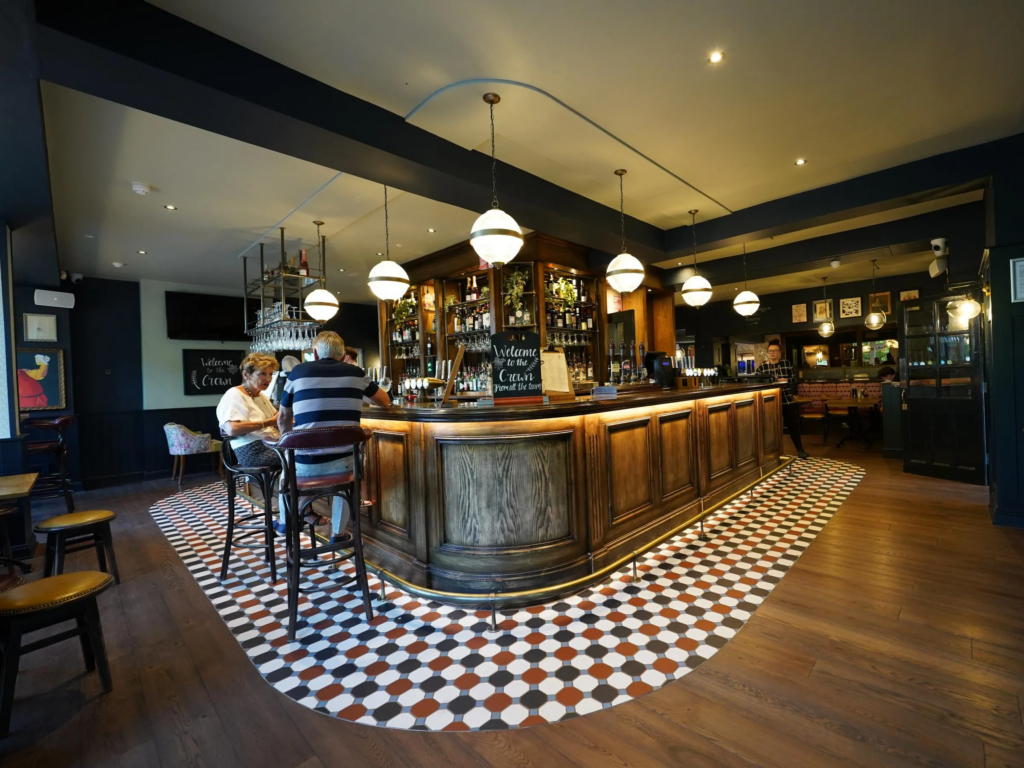
CAMRA’s annual Pub Design Awards are intended to promote and recognise the highest standards of architecture in the refurbishment and conservation of existing pubs in the UK, as well as in the construction of new ones. They are judged by a panel of experts in design and conservation. There are several categories and the winners, announced on 19 June, are listed below. Just one award went to a London pub; a highly commended in the Refurbishment category for the Crown Inn, a Shepherd Neame house, in Chislehurst.
- There were no winners chosen in the New Build or Community Local Awards
- Historic England Conservation Award: the Vines, Liverpool
- New Build Award (Highly Commended): Hall & Woodhouse Taplow, Buckinghamshire
- Conversion to Pub Use Award: Bod (Titanic) Alsager Cheshire
- Refurbishment Award: Kings Arms, Elham
- Community Local Award (Commended): the Pipe Makers Arms, Broseley
Laura Emson, CAMRA’s Awards Director, commented, “It is only right that the blood, sweat and tears poured into these pubs is celebrated. I would like to raise a glass to all these award-worthy pubs! We hope beer-lovers across the country will seek out these breathtaking examples of how beautiful UK pubs can be, if given the appropriate love and care these much-loved establishments truly deserve.”
Whitbread and Premier Inns
I mentioned in the Trade News column in the previous edition that Whitbreads are looking to incorporate adjacent pubs into their Premier Inn hotels, thus making them part of the hotel (usually as restaurants) and no longer open to the public. In planning terms this is a change of use which requires full planning permission. It has emerged that Whitbreads however are attempting to by-pass this by applying to local planning authorities for Certificates of Lawfulness instead. CAMRA’s Pub Heritage Group has identified 114 possible cases where this may be happening and is asking CAMRA branches to check for any such applications and to oppose them. Whitbreads are arguing that for these sites ‘the majority of business is the sale of food’ so, instead of being sui generis drinking establishments, they should be in the planning class for restaurants or hotels. Presumably they are hoping that the authorities involved will accept that this is just a technicality. This is a concern because the use classes for hotels and restaurants have permitted development rights attached to them and, if this precedent were generally extended to food-led pubs, the protection that the sui generis status gives them would be seriously diluted. So far one case has been identified in London and happily the local authority involved has confirmed that they would require planning permission. One point that this situation does highlight is that there is no agreed legal definition of a pub for planning purposes. CAMRA is looking to see one introduced.
Historic pub interiors
Here are some recent updates to CAMRA’s inventory of historic pub interiors. Please remember that these pubs are listed for their architectural significance and so they may not necessarily sell cask-conditioned beer. Please check WhatPub to confirm the situation.
(1) Added to the inventory at Two Star:
◆ Prince George, Hackney; included for its multi-room layout with four surviving rooms. It has an old central counter with panelling and Corinthian columns to the bar back. Wood panelling, fixed seating, an old fireplace and sash windows survive. There is also a distinctive porch to the side entrance. Interesting pub sign…
(2) Added to the inventory at One Star:
◆ the Latchmere, Battersea: the large L-shaped bar on the ground floor has an early 20th Century bar counter and back, along with other fittings from this period. Long-standing theatre pub (the theatre being on the first floor).
◆ the Old Eagle, Camden Town: a three-storey Victorian corner-site pub with a variety of fittings. The main feature inside is the L-shaped panelled bar counter, quite likely dating from Victorian days. Parts of the back bar fitting seem of similar age with the most distinctive feature being the green and white coving at the top and its now indistinct relief decoration. There are mosaics in the flooring of the two entrances and an unusual eagle motif in the glass roof.
(3) Upgraded from One Star to Two Star following re-assessment:
◆ the Crown Hotel, Cricklewood: a grand Jacobean style public house built between 1899 and 1900 by the Cannon Brewery of Clerkenwell. The Crown has been upgraded due to the quality of its original features. The lounge in particular has a splendid multi-panelled bar back, old bar counter, carved fireplaces, many bell-pushes and ornamented plaster ceiling. Devotees of the Dubliners will know from McAlpine’s Fusiliers that the craic was good here.
◆ the Starting Gate, Wood Green: an impressive two storey corner pub which was refitted in 1899. Upgraded due to the considerable amount of late Victorian fittings that remain, in particular the surviving snob screens and glazed partitions. Grade II-listed.
◆ the Flask, Highgate: the Flask is made up of two buildings. The three-storey section probably dating from the early 18th Century. The old servery is an exceptional and highly unusual piece of pub architecture with its glazed sash windows and aged shelving and panelling. The two rooms either side retain much from an interwar refurbishment. Grade II-listed.