The UK is the second biggest export market for beers from the USA and so I thought that this was a good time to find out what has been happening ‘across the pond’ during this time of adversity for the beer sector.
Although 176 brewers closed in the USA in 2021, a staggering 710 breweries opened, taking the total to around 9,000. Almost 60% of these are members of the Brewers Association (see note below). In August, a number of them came to London to promote craft American beer, offering an opportunity to ask how Covid had affected them.
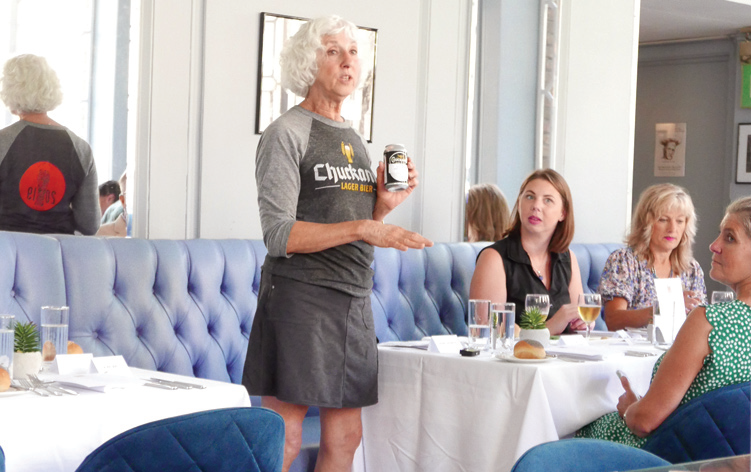
Mari Kemper has been involved with brewing for many years and, along with her husband Will, is considered a pioneer in American craft brewing. They started their first brewery in 1984 and their current brewery, Chuckanut, situated close to the Canadian border in Washington State, usually produces 4,000 barrels per annum. With the area’s soft water, it is known for its lagers. Mari said, “98% of our beer is draught and we got through the first year with help from the Government and keg off sales. We were fortunate that we already had a following who had already got kegerators and they continued to buy. This, alongside growlers, kept us going.” This was just as well because their local outlets closed and Chuckanut couldn’t export beer to Canada because the border was closed. Unfortunately, like many businesses, they had to let staff go but, Mari said, “All of the sixteen breweries in our area survived” and the brewery had begun to plan for the future. In 2021, they bought their first canning line, which will help should there be another pandemic.
Upslope Brewery is based in Boulder, Colorado and was fortunate enough to have had an established canning line when Covid struck. “It was a big shock to have the Tap Room closed,” said Alex Meyer, the head brewer. “Our keg sales went down and the can sales went through the roof. What we noticed was that it was the more established brands that went well; people didn’t seem to want to experiment. The other change was that our packaged sales used to go through liquor outlets but then there was a change in the law and we were allowed to sell through supermarkets, meaning our sales are now 80% cans. We were also lucky that we were going to set up a second tap room but we didn’t have time to finalise it before Covid hit, so we didn’t have that extra commitment.” Before the pandemic, the brewery was producing upwards of 50,000 barrels but this dropped by around 10,000. Sales have however been boosted by ‘hard seltzers’. These are classified in the USA as a malt beverage but are usually fermented sugar solutions with added flavour or juice which are then carbonated. It is thought that their popularity is due to their low calories and carbohydrates. Also, compared to many other canned alcoholic drinks in the USA, they have a relatively low ABV (5%). But this drink isn’t for everyone, “Hard Seltzers are now 50% of our production so we thought we’d try export. We produced some in Belgium for export to France but the market really wasn’t interested.”
Hard Seltzers are also a key line for DC Brau, who were the first in the District of Columbia to produce them (the brewery is in Washington). Like Upslope, their volumes took a decline during the pandemic from their usual 16,000 barrels per annum and so they looked at other avenues. Alex Spencer, the lead brewer, said, “We sell through supermarkets but only in DC; in Virginia, we can’t. Each state has their own laws and they can even vary from county to county. To help volumes, we decided to set up a home delivery service, which we did ourselves, using a third party to process sales.”
Despite the need to close, the brewery did not have to pour any beer down the drain. “Our one off beers and our barrel aged programme took a hit as people moved to ‘safer’ beer styles,” said Alex, a reflection that also echoed Upslope’s experience. He added, “The market is beginning to recover but our volumes are not fully back to normal and the situation has not been helped by a driving down of margins. Usually, our local sales have been driven by local federal employees and a lot of these are still working from home.”
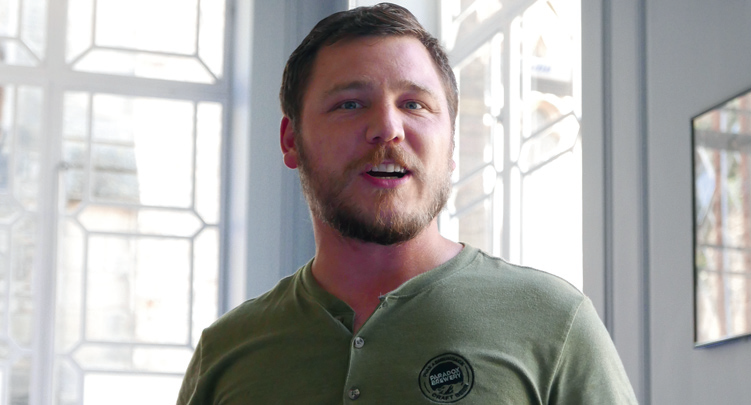
Paradox is a 5,000 barrel brewery in North Hudson in the Adirondack Mountains. They are another brewery that rethought its sales approach. They started off in an old petrol station but, in October 2019, bought a new 15 acre site to build a new brewery in an economically deprived area. Devon Hamilton, Director of Operations, lamented, “We were only trading a couple of weeks with our new tap room when we had to close thanks to Covid. We sold beer on a table outside. No one lives nearby so we rely on seasonal visitors. We have to make our money between Memorial Day (end of May) and Columbus Day (October). It was hard that year but the owners kept things going through their own pockets.”
Paradox decided that they didn’t want to undercut their wholesalers, who supplied supermarkets and bars. Devon said, “To deliver direct, a brewery has to get a licence to be a wholesaler. It’s a bit of dog eat dog out there. We took the line of ‘supporting us to support you’ and worked on relationship building and hiring a marketing manager to talk directly to customers. We produce a regular newsletter, which covers our new beers. We kept our experimental approach and these new beers account for 40% of our volume.” Devon added that this approach has meant that “current sales are ahead of pre-pandemic but our overheads are higher”.
Maui Brewery is in Hawaii and bills itself as the Island Brewery. It’s the biggest of the breweries nterviewed, with a projected 90,000 barrels being brewed in 2022. As well as the usual lagers, pales and IPAs, their beer range has a few on the unusual side. They pride themselves on using local incredients, such as pineapple and coconut. Maui was set up in 2005 when Garratt Marrero, the brewery’s founder and chief executive, moved from Santiago to Hawaii specifically to start a brewery.
It has gradually expanded and has added four restaurants to its portfolio: two on the island of Maui and two on Oahu. Garratt explained the impact that the pandemic had on them: “Most of the locals drink Bud and Heineken and so, when travel was forbidden, we lost a lot of our customers. We weren’t even allowed to travel between the islands, so our market was further reduced. During the pandemic, we did sell more cans but historically the bulk of our business has been draught and this is more profitable.”
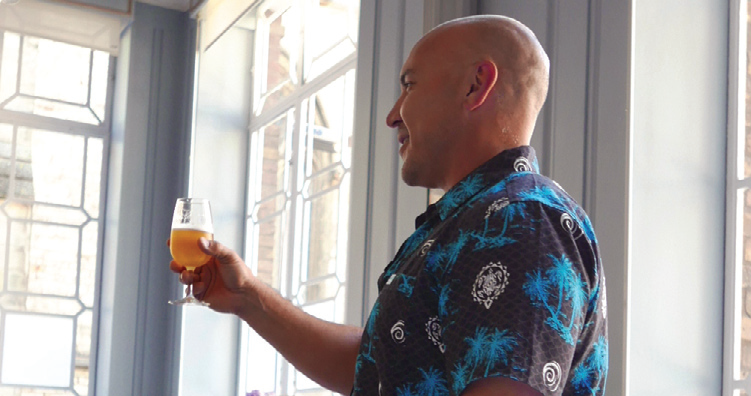
Despite the recent hurdles, most of the breweries have an eye to the future. Maui, for instance, recently announced that they had bought Modern Times, a brewery in San Diego, which will add another 35,000 barrels to their production and give them a foothold on the mainland. But the last word goes to Devon Hamilton of Paradox Brewery to sum up the sentiment of all of the breweries spoken to: ‘We made it’.
Christine Cryne
Note: the Brewers Association is a not for profit trade association that ‘works to promote and protect small and independent American brewers, their craft beers and the community of brewing enthusiasts’.
One British barrel is equivalent to 1.4 US barrels.