In my article in the previous edition of London Drinker, Ivisited pubs under threat of complete obliteration should the planned third runway at Heathrow Airport be constructed, as is current government policy (but this may be subject to a quicker U-turn than any Airbus A380 is able to execute!).
Those pubs were located to the north-west of the airport, where the tarmac is due to be laid over villages that have buildings dating back to the last millennium and the M25 will be moved sideways. The new runway will also have a knock-on effect on the areas surrounding the airport which may not be in the line of bulldozers but will be under pressure from the supporting infrastructure that will need to be built, like hotels, car parks, maintenance facilities and myriad other airport-related developments.
My tour around the threatened pubs resumes in Sipson, north of the airport. Surprisingly isolated and surrounded by fields sits the Plough and its much larger neighbour, the hotel that is now called the Holiday Inn. A landmark long visible from the M4 spur road roundabout, it was for many years the Trust House hotel.
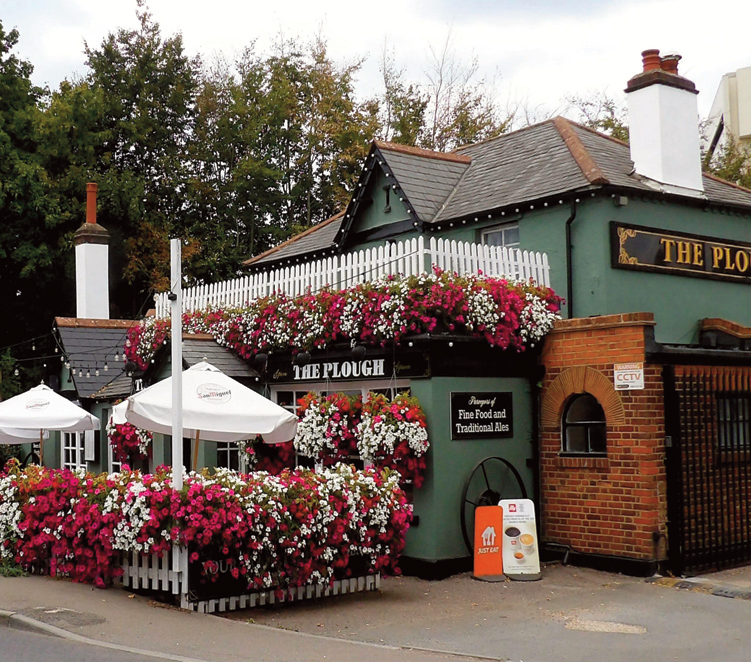
Sadly, cask ale isn’t served at the Plough but it merits a mention owing to its extraordinary number of hanging flower baskets on my visit and its excellent Indian-inspired food menu. Guests at the hotel are probably completely unaware they could get a much more authentic dining experience (and pay a lot less) by walking a few yards out of the hotel compound and into the pub that the hotel overshadows.
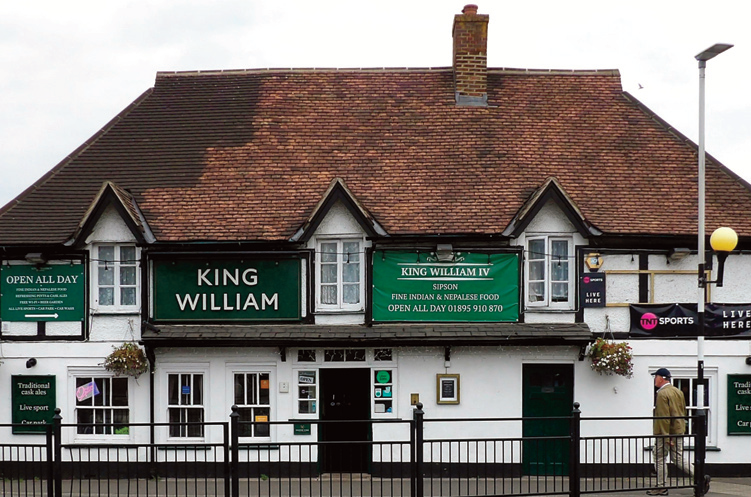
Continuing towards the airport, the King William is a remarkably old pub, although its location on a mini-roundabout, surrounded by modern development, isn’t exactly sympathetic. A 16th-century timber-framed building, it’s also Grade II listed. Inside it wears its history lightly with the main attraction on my visit being the Sky Sports Saturday afternoon football results show. Cask ale was temporarily unavailable on my visit although the CAMRA website suggests two ales are regularly served.
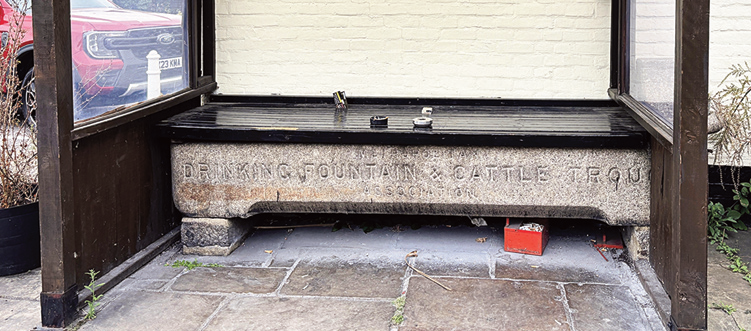
The Three Magpies epitomises the development of the airport. It is the last remaining building from the hamlet of Heathrow that gave the airport its name. Another of the last surviving pubs on the Bath Road, there’s been a hostelry here since the 16th century with the current building being about 150 years old. An old Metropolitan drinking trough in the car park (currently used as a bench in a smoking shelter) emphasises the pub’s long history on this ancient road into London. From the outside the pub looks like a defiant survivor against the accumulated development of the last seventy years, sitting among and above a tangle of service roads. The northern runway is only a couple of hundred yards away and it’s almost on top of the entrance to the tunnel into the Heathrow central terminal area. It is only a ten-minute bus ride away from Terminals 2 and 3 if you fancy a change from the airport Wetherspoon’s, although the Three Magpies won’t be serving Stella at 5am!
While the seating out at the back looks on to a wall topped with barbed wire, the interior of this Greene King pub is surprisingly plush and it is an unexpected haven from the noise and activity on its doorstep. It also served me the best ale of my trip; a good pint of London Glory. Unfortunately, the pub sits right on the margins of the third runway development area and the Bath Road will be diverted northwards at exactly this point. Therefore, like the King William, the Three Magpies could easily face the wrecking ball as the airport’s perimeter moves north-westwards.
A pub that will probably be safe – just – is the Pheasant Inn in Harlington, just north of the Bath Road. It’s in an area that might be unique for alternating luxury hotels like the Radisson Blu, Marriott and Sheraton Skyline (all have bars but no real ale) with post-war housing estates. The pub is also phenomenally popular, particularly for its food. It must also be unique for having a pheasant-shaped extension (see photo) with wide wing-like eaves and even a head jutting out above. Another example of the antiquity of the pubs in the area, it’s also Grade II listed with the original building (minus pheasant) dating back to the 18th century. Two real ales are available and I enjoyed Sharp’s Sea Fury.
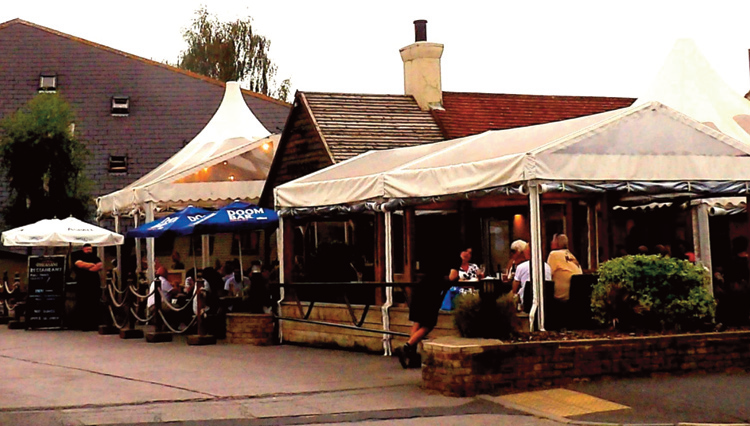
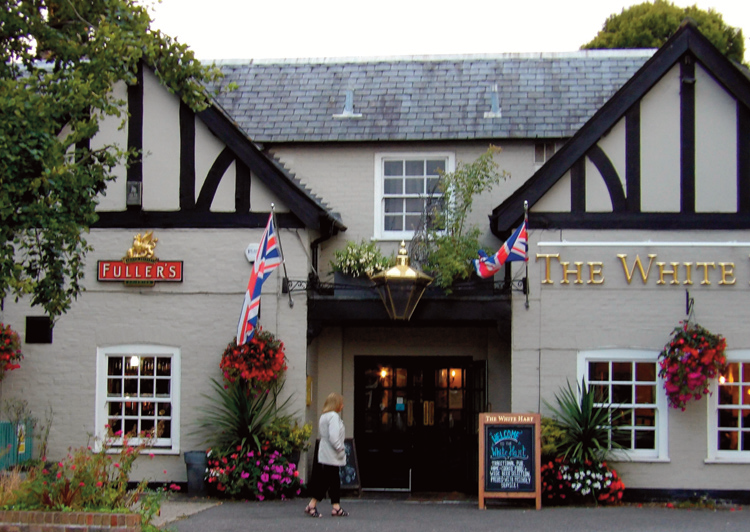
The only pub in the area that regularly features in the Good Beer Guide is the White Hart, further into Harlington village and slightly removed from Heathrow’s frenetic activity. It’s a Fullers house, although only London Pride and ESB were available on my visit. It’s a spacious pub with a restaurant at one end and comfortable soft furnishings in the bar area. Beneath the Fuller’s branding is a deceptively historic building, dating back to the 18th century and, guess what, it’s also Grade II listed. The pub is decorated with eclectic bric-a-brac. A Nipper-like ceramic dog positioned next to an old gramophone might be a tribute to the record company, HMV, which had a factory in nearby Hayes.
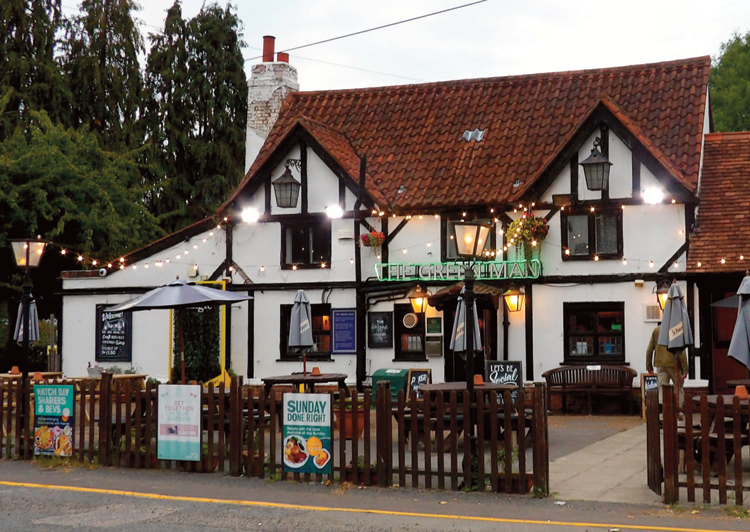
The pubs in Harlington are likely to be almost directly under the flight path of the new runway. This is a familiar experience to drinkers at the Green Man at Hatton Cross to the south-east of the airport, many of whom work at the airport. A five-minute walk from the tube station, this pub is extraordinarily close to the flight path of aircraft making westerly approaches to Heathrow’s southern runway (known as 27L). Planes pass only a few hundred feet overhead, enough to create downward air vortices that can make lampposts wobble. When aircraft are taking off in an easterly direction, the largest planes, like Airbus 380s, pass very low over the pub at full power. Built in 1640, the Green Man is even older than the pubs to the north of the airport but curiously it is not listed. Inside it had a genuinely antiquated feel with old wooden beams and watch-your-head doorways and is in effect divided into two separate sections either side of the bar. It’s a Greene King pub but stocks guest ales. I had Hazy Day, one of the brewery’s seasonal specials.
As with most of the pubs visited in the previous article and despite their age and architectural merits, these airport pubs might have been turned into quaint gastropubs monetising their genuine history were they in more rural areas. Instead, they have the feel of places that primarily serve their local communities. Equal in heritage to ‘chocolate box’ pubs in, say, the Cotswolds, it would be hard to find a tourist in any of them. This is ironic given the second biggest hub of tourist traffic in the world is on their doorstep, Dubai having overtaken Heathrow. That’s a position that building Heathrow’s third runway may overturn but we must be vigilant that this is not at the expense of these hidden treasures of London pubs.
Mike Clarke