Pubs are under threat on many fronts these days, particularly economically. There are however at least three London pubs which face a danger that is so existential that it will not only destroy them but also obliterate the villages that they serve. They face being replaced by vast stretches of concrete and asphalt and building work on a massive scale.
These are the pubs and communities that lie in the way of the proposed third runway for Heathrow Airport. Following the planning process for this huge piece of infrastructure over the last couple of decades has felt like watching the hokey cokey: ‘in out, in out, shake it all about’, for this curious corner of north-west London. The government recently announced this was a national infrastructure priority for which planning processes would be ‘streamlined’ in the pursuit of growth, so I thought that I would take a tour of the threatened pubs.
My tour started just over the London boundary into Berkshire to the Ostrich Inn in Colnbrook. This half-timbered coaching inn stands on the old Bath Road, one of the busiest routes west out of London until the middle of the last century when it was superseded by the M4. The old road runs right through the planned airport redevelopment and has much associated history.
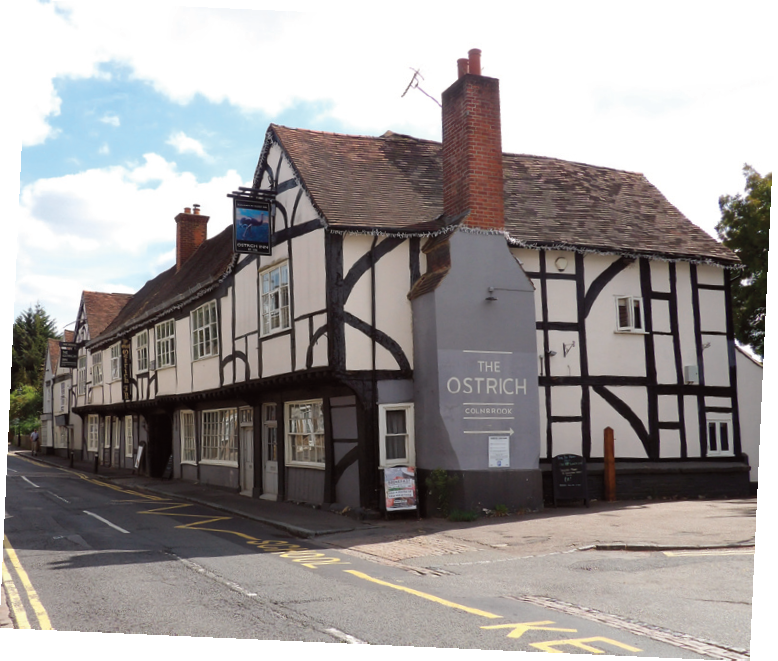
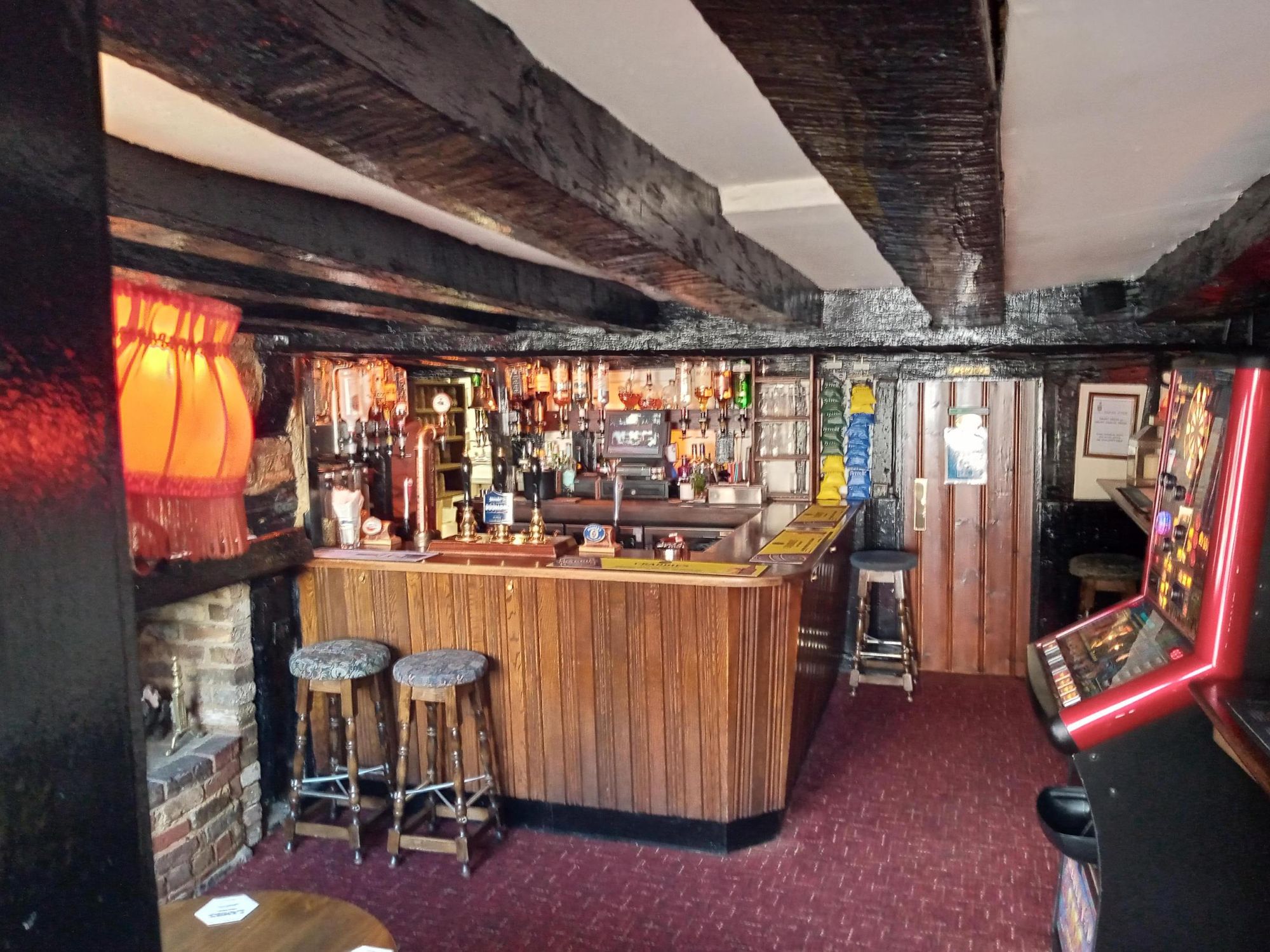
Dating from 1106, the Ostrich claims to be England’s third oldest pub. It was originally called the Hospice but the name became corrupted over the years. The Grade II*-listed building has a dark reputation; the parish council’s website tells of a legend that, in the 17th century, landlord John Jarman murdered over 60 travellers by tipping them through a hinged trapdoor bed into boiling liquid below. Fortunately, I enjoyed my pint of Windsor Knot from Windsor and Eton Brewery without being boiled alive. It’s now an upmarket Shepherd Neame pub (unusual for the area) but it also caters for bona fide drinkers. The ground floor is a series of atmospheric connected rooms with fireplaces and low beams. Staff will reportedly conduct short historical tours of the building if time allows. The beer garden is somewhat more modern with tables set out on artificial grass. It’s a splendid place for plane spotting. From slightly north-west of Heathrow’s current northerly runway, aircraft can be seen either on final approach or straining to take off (depending on the wind direction).
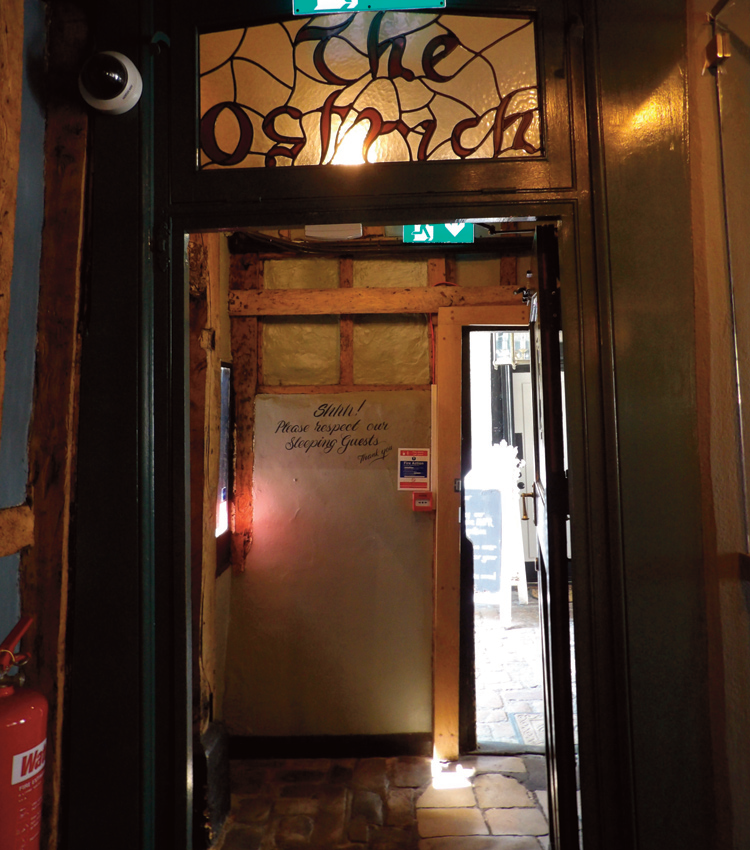
Although already close, the planes will come much closer to the Ostrich under the plans for the third runway. While the pub itself may be spared, the end of the runway will be just a few hundred metres away and Colnbrook will be all but consumed by the airport perimeter, with airliners passing at low altitude almost directly above the pub.
From Colnbrook I took the bus along a road that will cease to exist and crossed the M25 back into Greater London to a village that will be erased from the map entirely. Longford stands between the existing Terminal Five and the new runway and its planned terminal buildings. There’s no greater contrast between the White Horse, the village pub, and the enormous modern aircraft that are planned to taxi across its site. Such is the scale of the plans, demolishing a village and its pub will be small beer. Just west of Longford, it is proposed that the M25 will be moved a few hundred metres to the left.

The Grade II-listed White Horse dates back to 1534, although it wears its history lightly, perhaps due to its isolated location, being stuck between motorways and the airport perimeter. Built as a smokehouse for curing meat, it was converted into an inn in 1601 to serve travellers on the Bath Road. Note the bricked-up windows that recall the window tax that was in force from 1696 to 1851. Another pub on the old coaching route, it’s whitewashed with a half-timbered façade and low ceilings. Inside there are two snug, carpeted bars, separated by an open fireplace. Now surrounded by suburban development, it’s a classic hidden gem of a pub. Three real ales were available when I visited: Rebellion IPA, Greene King Abbot Ale and Doom Bar. Sitting at the outdoor benches with a pint, I sense an odd juxtaposition of living history against the constant take-offs and landings of the twenty-first century aviation industry next door.
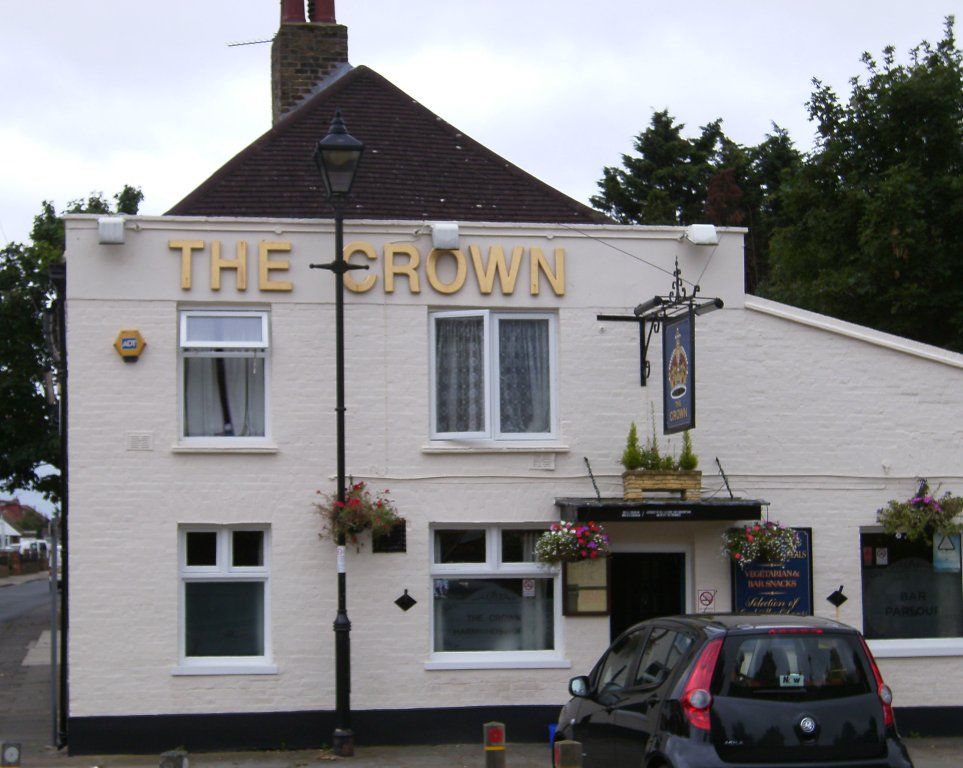
Slightly under a mile to the north and two buses away is Harmondsworth, the other village faced with obliteration. The village centre, gathered around a small green, is remarkably tranquil and unspoilt. Behind the medieval parish church is one of England’s most outstanding timber-framed buildings, the Harmondsworth Barn. It dates back to the early 15th century and is now owned by English Heritage. The village’s two pubs can be found on the green, the Five Bells and the Crown. Both are Grade II listed and date from the 17th century.
The Five Bells seems very much a locals’ pub, with an extensive seating area outside. On my visit, real ale wasn’t available (subsequently now sold, see pub updates). The Crown is unusual in having a frontage built at right angles on to a row of cottages behind. Inside, it has timber beams and exposed wooden floorboards with a fireplace unusually situated at the corner of the island bar. I contemplated my pint of J W Lees Bitter, the only real ale on offer, in a cosy spot on the solid wooden furniture by the window.

While most of Harmondsworth will be wiped off the face of the earth, it’s unclear whether the centre will be bulldozed or left within metres of the new perimeter because publicly available maps of the proposals lack vital detail. Adjoining land will however be required for car parks, hotels and the like, meaning that Longford and Harmondsworth will be changed forever.
There’s a paradox about these villages. Because there’s been the threat of a potential northern runway for decades, they haven’t been subsumed into modern developments. The pubs have a timeless appeal of English ordinariness that’s remarkable so close to London. It’s virtually certain that English Heritage-owned buildings such as Harmondsworth Barn will be preserved and potentially relocated, probably at the expense of the developers. But what of the pubs? Even if they’re dismantled brick-by-brick, where would they be relocated to? Where in the new landscape of an expanded Heathrow hinterland would a rebuilt 17th century pub be welcome?
Should the bulldozers move in, then this will be a test of how much present-day economic expansion respects the traditions of the past. Meanwhile, please do visit these pubs while they’re still standing.
A second article in the next edition will feature pubs to the north and east of the airport that could also be lost or changed forever.
Mike Clarke