In his 1968 documentary ‘From Marble Arch to Edgware’ the poet John Betjeman travelled along the entire length of the Edgware Road, mournfully reminiscing about the past and criticising the clean lines of modernist architecture. The road follows the course of Watling Street, a Roman road that stretched from Dover to Wroxeter. The current route dates from 1811 when Thomas Telford updated it, forming the basis of the current A5 trunk road. During filming in late 1967 there was still a hefty cluster of around 35 pubs along the route but, since then, a vast number have closed or have been demolished. Fortunately, there are still 22 pubs in business, although some have opened since 1968. As Betjeman noted, “Come on, let’s make a dash and meet it where we enter, the road that no one looks upon except as birds of passage. Oh Edgware Road, be our abode, and let us hear your message.”
On its southern reaches, there were formerly seven pubs; none now exist south of the Marylebone Flyover. The Green Man is currently the southernmost pub still in business. Situated next to Edgware Road station, it dates back to 1720 although the current marble fronted corner building was constructed in 1867. It is now part of the Pubs Love chain who run seven combined pubs/hostels across London. Then comes Kilburn, which Betjeman described as, “Ho for Kilburn High Road, Ho for a sumptuous feast, it’s your road and my road, and Ireland meets the East.” It has notably the highest Irish born/descended population anywhere in London, as well as the highest number of pubs anywhere along the route.

The Old Bell dates from c.1600 and was originally a coaching inn built on the site of a former mansion. It was popular with tourists visiting neighbouring Kilburn Wells. Rebuilt in 1863 and constructed in stock brick, among its prominent features are the two turrets that extend from its roof. The interior was renovated by owners Stonegate several years ago, although it retains some of its historic furnishings

The Cooper’s Arms was originally a beer house dating from the 1860s. It was rebuilt by Charringtons in 1926. Designed by Sidney Clark in a mock tudor theme with a stucco frontage, it features exposed timber framing, coat of arms, art deco stained-glass windows with Charringtons insignia, wood panelled walls and a bar counter with pilasters and fielded panelling. This pub is popular with the local Irish community for televised sports and live music events. It is also one of five pubs in Kilburn listed on CAMRA’s inventory of pubs with historic interiors.

The Grade II-listed Black Lion is another notable example, built in 1898 by R A Lewcock on commission by local brewers Michell and Aldous. It is an imposing corner building with a richly decorated interior featuring an ornate ceiling and copper relief panels by F A Callcott that depict 18th century folk at leisure. There are also partitions with etched glass windows, a long bar-counter with fielded panelling and pilasters, backed up with a grandiose bar-back with decorative cornices and plasterwork friezes. In 2022 after a long absence, cask beer returned when the pub was leased to London Village Inns.

Going towards Cricklewood, Betjeman makes a reference to its landmark pub. the Crown, “I like a memory to trace the red electric trams. However far their journeys made, they always waited here and, in this terracotta shade, their passengers drank beer.” Originally a coaching inn dating from 1750, it was rebuilt by the Cannon Brewery in 1899. Designed by Henry Whiteman Rising in the Jacobean revival style, it stands four storeys high, faced in sandstone with rusticated arched columns above the entrance flanked with pilasters. The first-floor projection boasts a gargantuan 16-light bay window and the upper two dormer storeys are recessed into its elaborate Mansard roof structure. Some original interior bar fittings remain including three carved fireplaces, parquet flooring and a multi-paned bar-back with square pillars and capitals. It is Grade II listed and continues to be run as a hotel, currently under the AG Hotels Group.
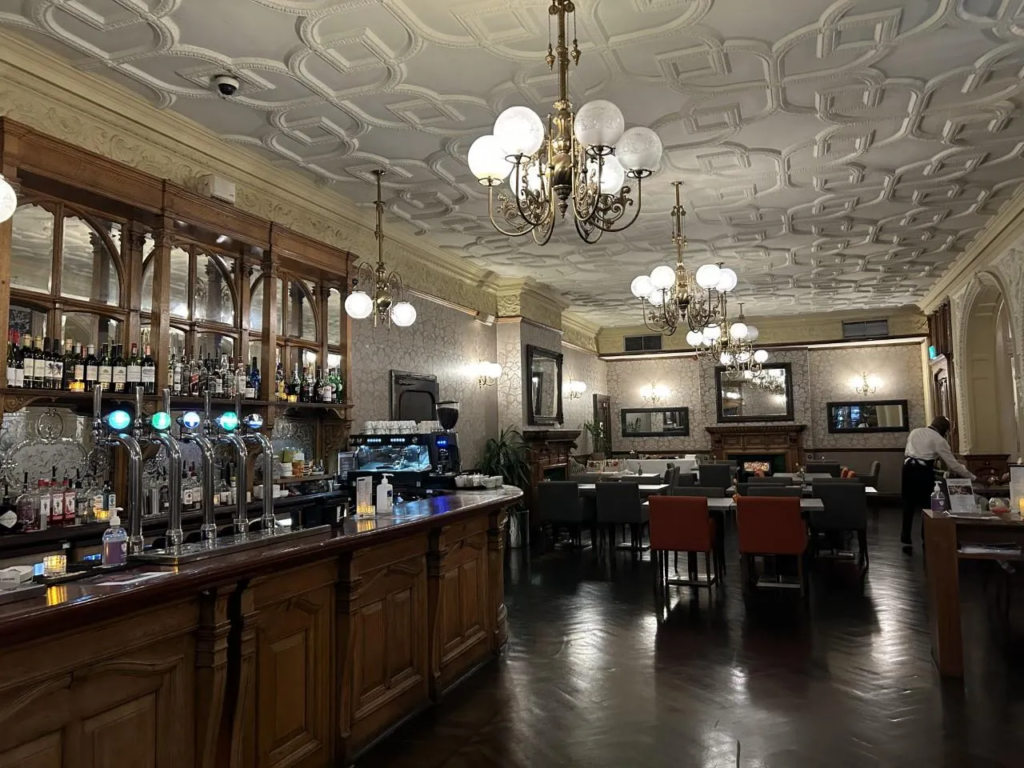
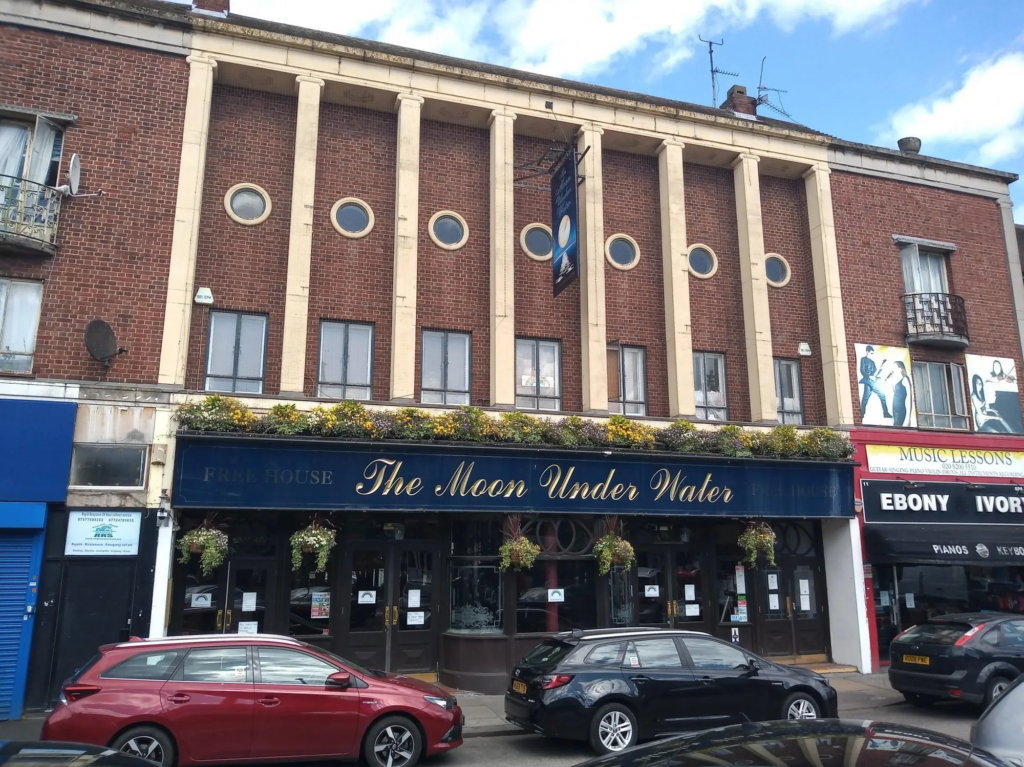
Heading into the former county of Middlesex, many of the pubs north of Cricklewood have since either been closed and demolished or converted to other uses. The Moon Under Water in Colindale is a rare outpost, opened in 1990 by Wetherspoons on the site of a former Woolworth’s store. It is a large pub dedicated to live sports and dining, although it stocks a good number of cask ales from various London breweries.
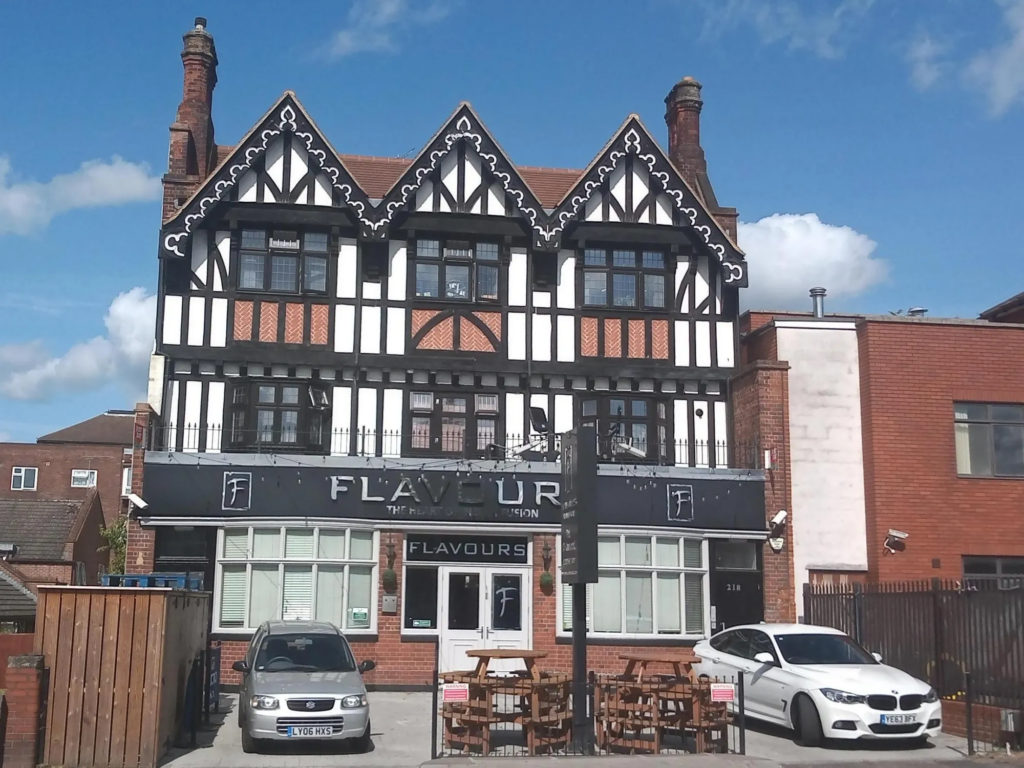
Most of Burnt Oak’s historic pubs, such as the Lansdowne and the Bald Faced Stag have ceased to be. Only Atmosphere formerly the Prince of Wales, and Flavours in 2020 when the picture below was taken) remains. It was originally built as a Michell & Aldous beer house in 1867 and was rebuilt in 1930 by then owners Trumans. It is in the mock-tudor style with exposed timber framing, asymmetrical sash windows, a trio of steeply pitched roofs and florid patterns on the gables. In 2013 it was renovated with the upper floors turned into apartments and in the following year it reopened as a desi pub.
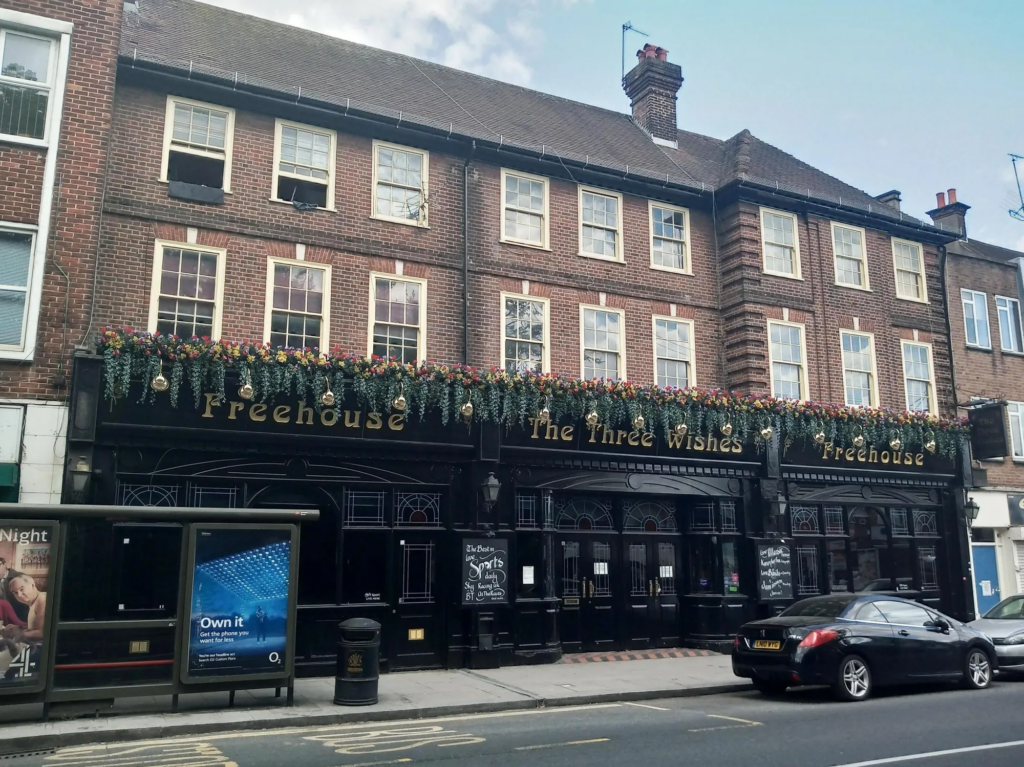
At the end of the route, Edgware used to boast a sizeable collection of pubs. Inevitably, many have closed over the years. Some have been demolished while others, such as the Masons Arms, the Beehive and the Corner House have been turned into restaurants. Sadly, the Grade II-listed Change of Hart (HA8 7EE) remains vacant and has deteriorated since its closure. Towards the northern end of the high street is the Three Wishes. Currently the northernmost pub on Edgware Road, it was opened in 1993 by Wetherspoons (as the Blacking Bottle) in a former freezer supply store. It has a vintage interior with wood-panelled walls, stained glass windows and a bar area with fielded panelling and pilasters, supporting an overhead gantry interspersed with coloured-glass inserts. It was sold to Upper Deck in 2006 who subsequently renamed it; weekly live music performances are often popular, though cask options have gradually dwindled since its Wetherspoons days.
Mike Goldwater