The gloom continues
I do try to bring good news; unfortunately, there isn’t much of it about. At the end of March, Revolution Bars announced that they that will be disposing of around 20 of their underperforming sites. They have found, according to a report in CityAM, that ‘young people’ are scaling back on nights out because of ‘cost pressures’.
Although they have long since ceased to brew or operate wet led pubs, Whitbread still own the Brewers Fayre and Beefeater pub/restaurant chains, consisting of around 400 sites. Christie & Co have been commissioned to sell up to 50 poorly performing sites. In addition, Whitbread are looking at incorporating a further 100 or so sites into adjacent Premier Inn hotels, another Whitbread brand. A previous attempt to sell the Brewers Fayre and Beefeater chain to an American private equity company came to nothing. In a similar vein, pizza chain Papa Johns are closing 43 low performing sites, including 13 in London.
Or does it?
Stonegate still have their problems and, as you will note from the WhatPub Update, they are converting a lot of pubs to their Craft Union format. Punch however are on the up, having acquired 24 pubs in the north-east and Yorkshire from the pub chain Wear Inns for a reported £15 million. Perhaps the most significant story is that, in May, Heineken, owners of Star Pubs & Bars, announced that they were to spend £39 million on their pubs. This includes reopening 62 sites which have been closed long term and refurbishing 612 others. They are aiming in particular to reopen suburban pubs to attract those who are working from home. Star are not the only ones who are looking at this market. The chief executive of Marston’s, Justin Platt, told the Propel Newsletter that he believes that the ‘local pub segment’ ‘is buoyant and will be lucrative for those who get it right’. The works that Star are planning will include energy efficiency measures, including heating controls, insulation and low-energy lighting which they hope will reduce energy costs by 15%. Some examples were given but only one was in London, the Roxie Steak & Tap (formerly the Black Dog) in Twickenham. There was one interesting quote from a Star spokesperson, “It would be unrealistic for any major leased and tenanted pub company to have all its pubs open at any one time.”
Wetherspoon’s news
For all the social media warriors who were predicting that JDW’s pub disposals were an indication that the company was in financial difficulties, it looks as if you were wrong. The company reports that trade at weekends and in big cities has recently been very good and sales are now exceeding pre-covid levels. Like-for-like sales for the 13 weeks to 28 April 2024 increased by 5.2% and this year’s profit is likely to be in line with expectations at around £70 million. Interestingly, breakfast sales are increasing, which was put down to people returning to the office. This seems to contradict what Star and Marston’s think is happening.
Happily, sales of cask beer are improving noticeably, although Guinness has suddenly become fashionable among younger drinkers. It isn’t that long ago that JDW tried, in a short lived experiment, to do away with Guinness.
JDW are in dispute with Carlsberg UK over the reduction in strength of their Danish Pilsner from 3.8% ABV to 3.4% ABV so as to take advantage of the lower duty rate. Sir Tim does not agree with this practice, which I would suggest is the brewing industry’s version of ‘shrinkflation’. Carlsberg have undertaken to supply JDW with the 3.8% version for as long as they are still brewing it.
JDW continue to shuffle their pub estate, which currently stands at 809. The Asparagus in Battersea has now been sold to the Portobello Pub Company (see the Pub News column) which leaves them with two pubs to go from their original list: the Wrong ‘Un in Bexleyheath and the Alfred Herring in Palmers Green (which closed on 19 May). Two more pubs were put up for sale in early April: the George in Wanstead and the London & Rye in Catford. The George is a leasehold. JDW never explain their policy as regards pub closures but one report suggested that they were targeting pubs which are ‘smaller and older or where the company has a second pub in reasonably close proximity’. The Tichenham Inn in Ickenham closed on 26 May. It is understood to have reverted to the pub operating freeholder.
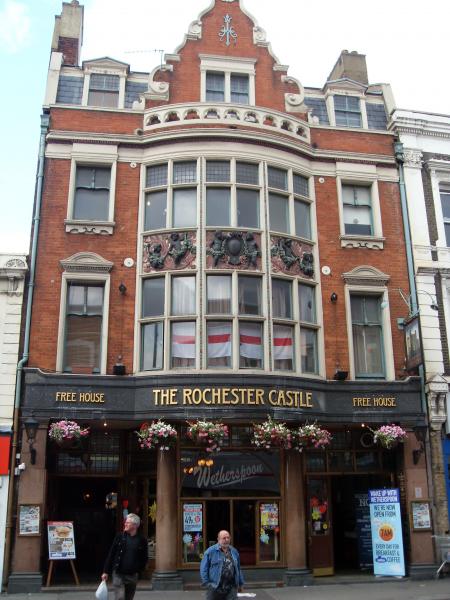
Following local protests, the Rochester Castle in Stoke Newington has been taken off the market (see the Pub News column) while the Holland Tringham in Streatham, which was once up for sale, has just reopened after an £800,000 refurbishment. It looks worth a visit just for the new toilets!
JDW appear to have given up on the site next to Charing Cross Station (11 Strand), having withdrawn their appeal against the City of Westminster’s refusal of planning permission. This follows their having been refused permission to convert the former TGI Friday site in nearby Bedford Street into a pub.
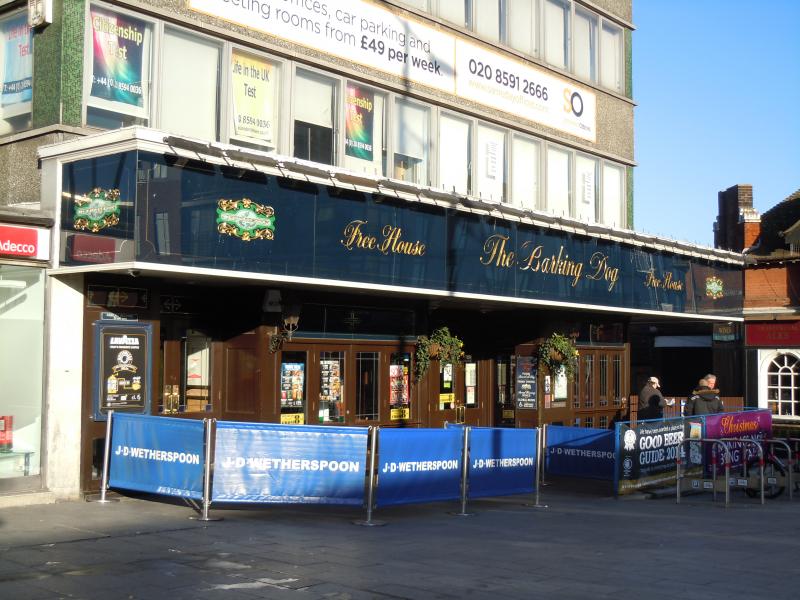
The Barking Dog, by the station, closed in 2022 to allow the building above it, Trocoll House, to be demolished. The replacement building described as ‘a new gateway to Barking’ was due to reopen about now but very little progress has been made (other than the building demolition). A spokesman for JDW told the Barking & Dagenham Post, ‘Wetherspoon is committed to reopening the pub. There are no timescales as yet. It depends on the date the developer hands over the site to Wetherspoon. Wetherspoon is not in control of that’. The current estimate is early 2026.
JDW’s pub inside Victoria Station, simply called Wetherspoon’s, has reopened after a £1.3 million refurbishment which has seen it expand into adjacent premises.
RedCat Pub Company
RedCat, the private equity funded pub company, is experiencing ‘significant challenges in the operating environment of the hospitality industry’ and so is conducting a strategic review of its business. The company, chaired by Rooney Anand, formerly of Greene King, currently operates 114 pubs and hotels. Their opening move, at the end of March, was to place a subsidiary company, RedCat Leased Pubs, into administration. This company operates ten pubs which were acquired when the Competition and Markets Authority required some pubs to be sold as part of Stonegate’s takeover of the Ei Group. Other pubs in RedCat’s managed pub division may also be put up for sale in due course. The remaining pubs continue to trade as normal.
Six of the ten RedCat Leased Pubs are in London. The following remain open: the Railway Tavern, Edmonton, the Cumberland Arms, West Kensington and the Occasional Half, Palmers Green. These ones however have closed: the Redback, Fulham, the Elmbridge Arms, Weybridge and the Colton Arms, West Kensington.
Heineken grub up orchards
Apologies to the cider drinkers among you; I don’t often mention the subject and, when I do, it is bad news. In 1997, Bulmers (owned by Heineken) planted 300 acres of orchard at Penrhos Farm in Monmouthshire, near the Offa’s Dyke path. They claim now that a surplus of apples and a falling off in the demand for cider have made the site redundant. Just as the trees should have been in blossom the site was grubbed up and is up for sale. There is concern locally about the effect that this will have come the autumn on the migratory bird population such as fieldfares and redwings. The company has been accused of ‘needless environmental vandalism’ but it insists that it has acted within the Wildlife Act. It is understood that it will remain in agricultural use of some sort and a Heineken/Bulmers spokesperson explained the that the bittersweet apples produced by the orchard had ‘no other use’ than making cider which meant that the trees had to be removed ahead of the sale to ensure the viability of other crops. The trees were shredded for biomass. The spokesperson continued, “We continue to source all our apples from around 6,000 acres of orchards in and around Herefordshire and will continue to do so.”
The National Association of Cider Makers said 2,000 acres of British cider apple orchards had been lost in the past few years because the amount of cider being drunk in the UK had dropped by a third over the past ten years and the apples have no other use than for making cider because of their high tannin levels.
Hop production
I spotted this in Last Orders, the magazine of the Lichfield, Sutton and Tamworth branches (April/May 2024 edition) and, with thanks to them, I thought it worth sharing. The percentage by weight of the world’s hop supply breaks down as follows:
USA                 40.1%
Germany             34.7%
Czech Republic       6.1%
China                5.5%
Poland               3.0%
Rest of the world   10.6%
I assume that ‘rest of the world’ includes the UK and New Zealand.