On Wednesday 6 December, CAMRA’s London Pubs Group had a tour of pubs in Maida Vale, Tyburnia and Paddington. As usual, the emphasis was on pubs that have architectural merit.
The evening commenced at the Warrington Hotel. The Grade II-listed building rates three stars on CAMRA’s Inventory of heritage pubs, being a pub of exceptional national historic importance. This substantial end of terrace pub was built in 1857 and underwent a magnificent refit, probably in the 1890s. The grand entrance porch is embellished with glorious tiled columns and an intricate mosaic floor that announces the name of the pub. On entering the luxurious right-hand room, the eye is first attracted to the elegantly curving semi-circular bar counter and the elaborate canopy above it. This counter looks out onto a spacious room that is another feast for the eyes.
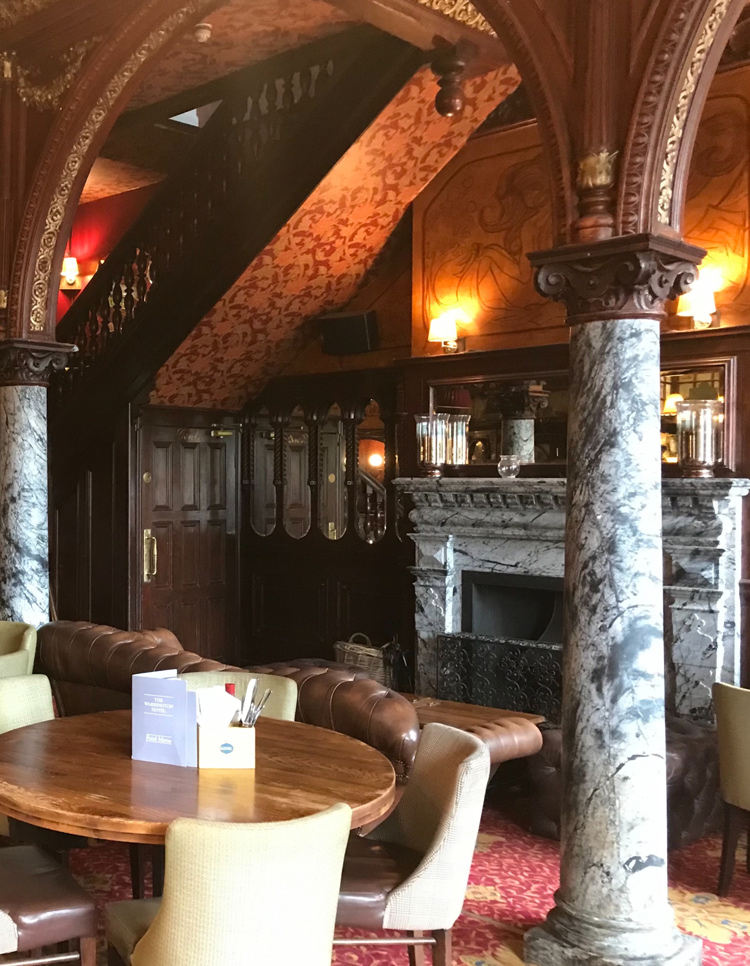
The grey marble of a stately fireplace is echoed by two marble pillars, which support arches enhanced with gilt patterning. All around the walls is a dizzying series of mirrors, each separated from its neighbour by a spiralling wooden pillar. At the far end is a recessed bay containing a large window with decorative stained glass. The erotic painted ladies date only from 1965 and tales that a brothel once operated upstairs are almost certainly apocryphal. The plainer left hand room was once divided into three, as the patterning on the ceiling shows. The usual real ales are Greene King Old Speckled Hen and Timothy Taylor Landlord.
The second stop was the Prince Alfred. This Young’s pub is Grade II*-listed and also rates three stars on CAMRA’s Inventory, again being a pub of exceptional national historic importance. The present fit-out is a result of a complete remodelling undertaken c1898. The last years of the 1890s saw extravagant spending on new pubs and existing buildings because breweries and publicans were jostling for market share within the context of strict controls on licence distribution. The highly compartmentalised bar arrangement was a characteristic feature of London pubs of the late C19.
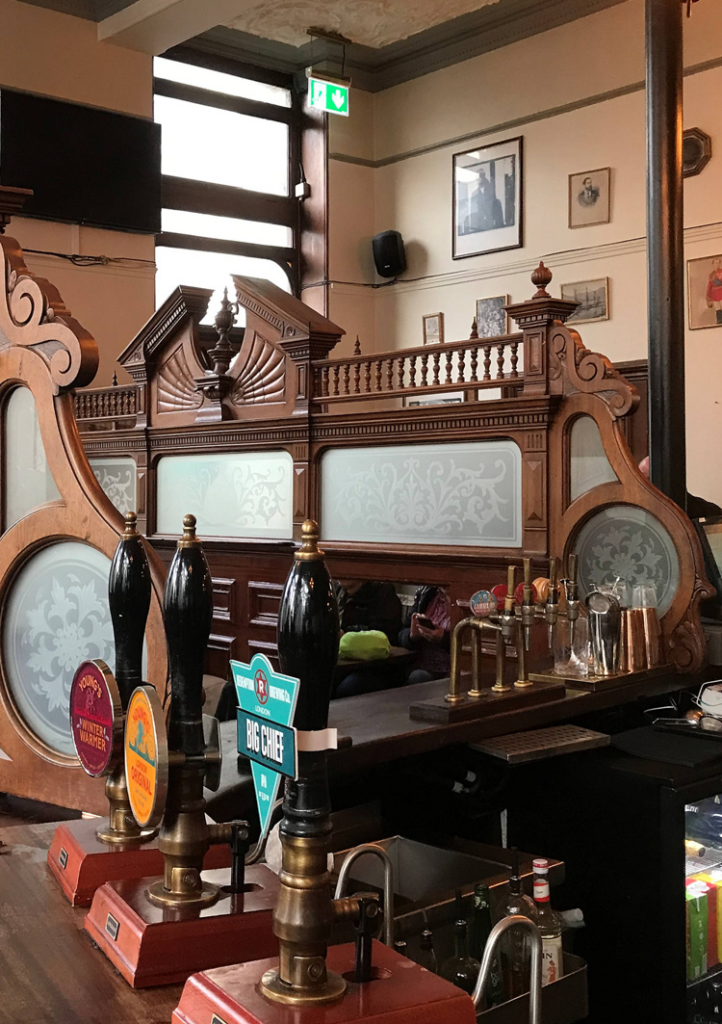
The work at the Prince Alfred introduced a peninsula bar servery, projecting out from the back wall, with five distinct compartments radiating from it, all divided by timber screens. The smallest of these was the ‘ladies’ bar’, a feature that survived until at least the 1980s. This area is distinguished by its rotating glazed screens (‘snob screens’) on the bar counter, which afforded greater privacy. At the rear, a billiards hall was added and is identifiable by the large rooflight above. The pub was first listed in January 1970 and the retention of its compartments was cited as a notable survival at a time when the opening out of pub interiors was commonplace. Two Redemption beers, Big Chief IPA and Rock the Kazbek, and Young’s Original are often served here.
Prince Alfred (1844 to 1900) was the second son and fourth child of Queen Victoria. The Warrington and the Prince Alfred are mentioned in Maurice Gorham’s books, The Local (1939) and Back to the Local (1949), both of which are beautifully illustrated by Edward Ardizzone.
Our third port of call was the Heron (originally the Fountains). Built in 1972 for Youngers as part of the private Hyde Park Estate, the interior has the cosy feel of a Swiss chalet. The famous Handlebar Club, founded in 1947 by the actor and comedian Jimmy Edwards, meets here on the first Friday of the month.
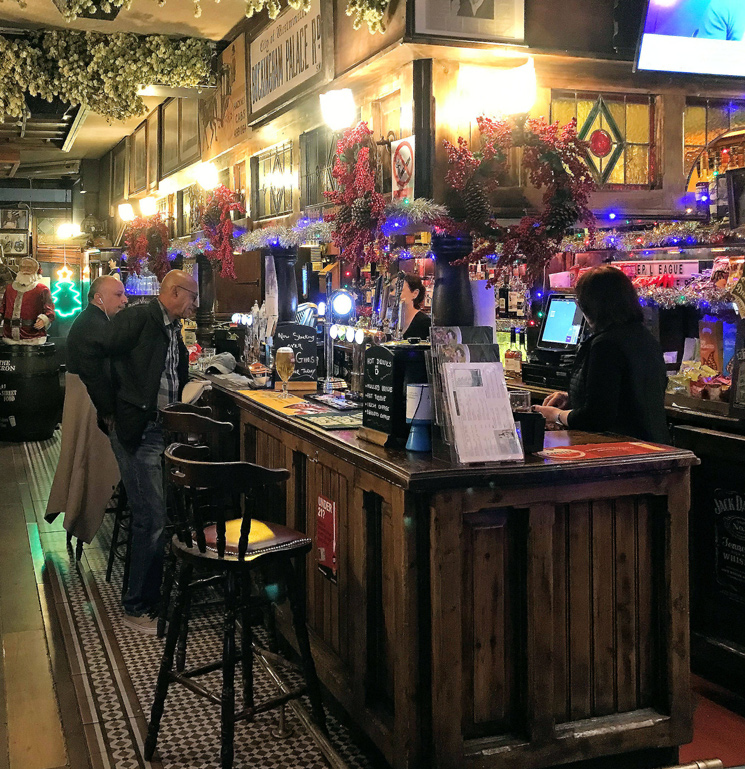
There are pictures from the club’s history on the walls, together with a range of interior fittings from the club’s previous home, the now-closed Windsor Castle. Greene King IPA and Wychwood Hobgoblin plus Weston’s Old Rosie cider are generally served here. This is an establishment whose ambience belies the usual reputation of 1970s flat-roofed pubs!
The penultimate venue was the Bear (W2 1JA). This former bank has recently been refurbished by the Craft Beer Company in an elegant manner that fuses old and new. It has a beautiful wooden bar and antique lighting plus banquettes, booths and tables. Featured in the Good Beer Guide 2024, Craft Pale (brewed by Kent Brewery) plus five changing cask ales are normally available. The pub’s name is clearly a nod to Michael Bond’s popular series of children’s books.
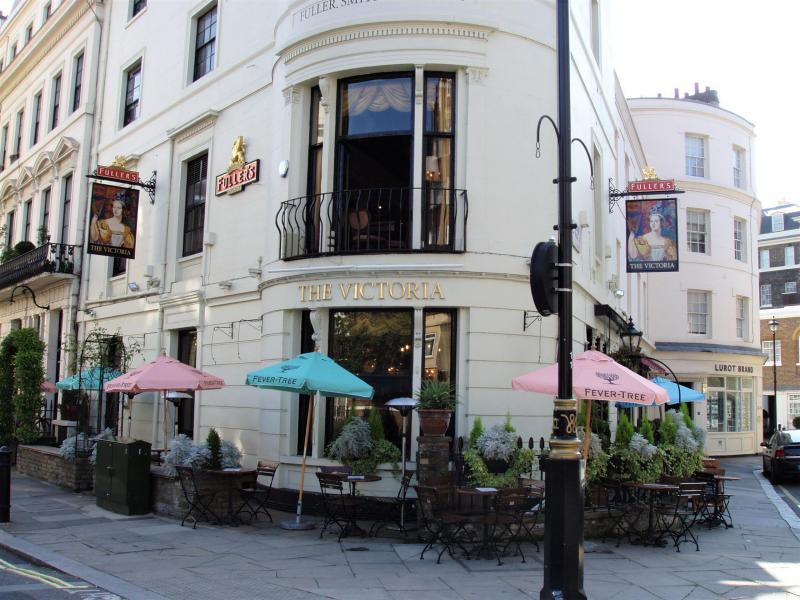
The final pub was the Victoria. It is Grade II-listed and rates three stars on CAMRA’s Inventory as above. It is a former Charrington house, now owned by Fuller’s, and it has some very early and spectacular fittings. Such was the amount of pub renovation at the end of the C19 and since, that any decor from before the late-Victorian era is incredibly rare. The décor here is stylistically mid-Victorian and a precise date, 1864, is suggested by the year on a clock in the bar-back fitting. This, and a side wall, have large mirrors with intricate gilding and coloured decoration. The counter is certainly from 1864 and retains a functioning brass water-dispenser for diluting spirits. A framed print illustrates scenes from Queen Victoria’s life, from whom the pub obviously takes its name. There are several outside doors that would once have led to separate internal drinking areas. Upstairs, the Theatre Bar has ornate fittings imported from the old Gaiety Theatre c1958.
A 15% discount is offered to CAMRA members. The pub is also in the Good Beer Guide 2024. Dark Star Hophead, Fuller’s ESB and London Pride, one Fuller’s seasonal ale and other changing cask ales from national breweries are usually offered.
Jane Jephcote and Kim Rennie