Earlier this year I travelled to Bologna, Italy’s seventh-largest city and culinary capital, with food and architecture in mind rather than beer but a brief internet search ahead of departure had turned up a number of promising-looking bars in the city. Prompted by that, and across four evenings, my three companions and I visited five of these establishments, each with an inviting choice of beers which, although mostly from small Italian breweries, had a distinctly international flavour.
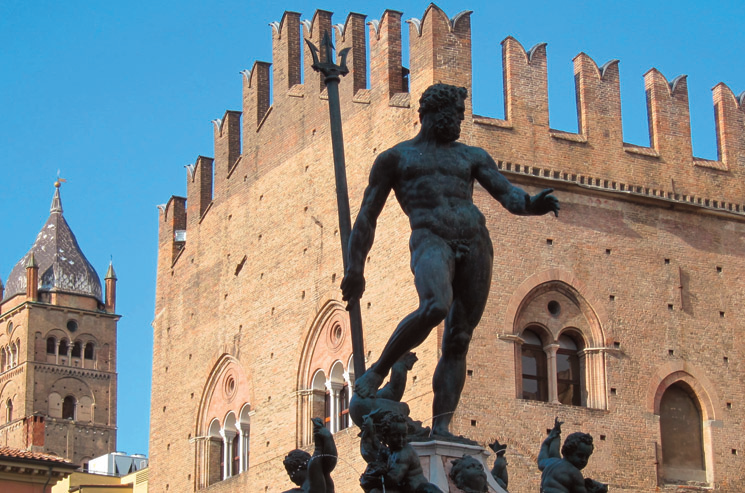
Statue of Neptune in Bologna’s Pizza Maggiore
It soon became clear that this city has embraced the ‘craft beer’ movement which has gathered pace in Italy over the last fifteen years. Bologna is the principal city in north-east Italy’s Emilia-Romagna region and, being home to the world’s oldest university, has a large student population. Many of the people we saw appreciating beer, on both sides of the bar counters, were under the age of thirty. Draught beer (birra alla spina) seemed particularly popular and that was what we drank; most of the premises displayed prominent blackboards listing the beers available on tap.
Our first visit was to Baladin Bologna, largely a basement bar beneath the bustling Mercato di Mezzo (Middle Market), just east of Piazza Maggiore, the city’s historic central square. This is part of a growing chain of outlets owned by the Baladin brewery, located in the village of Piozzo, near Turin. We’d visited their Turin bar five years earlier. I opted for a 4.8% ABV easy-drinking golden beer somewhat in the style of a German helles.
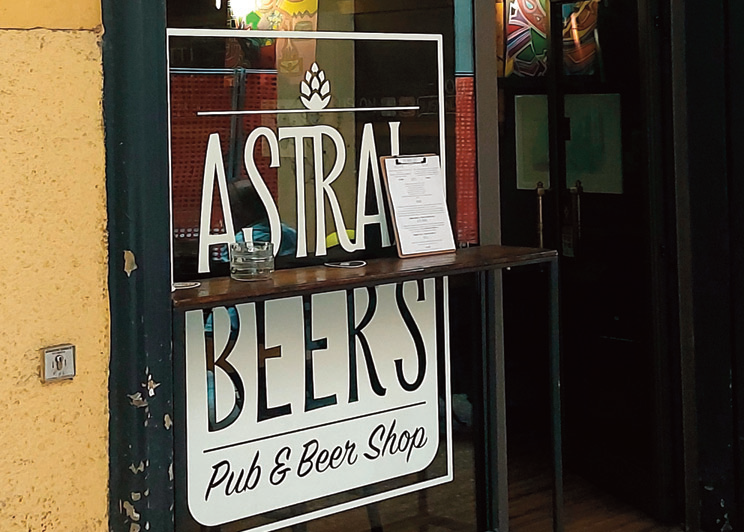
Next up, little more than a five-minute walk away to the south, was Astral Beer, a bar-cum-shop in a rather dingy parade. Here I tried another 4.8% ABV Germanic beer, a pleasant but unremarkable kellerbier called Franco from the WAR brewery just outside Milan.
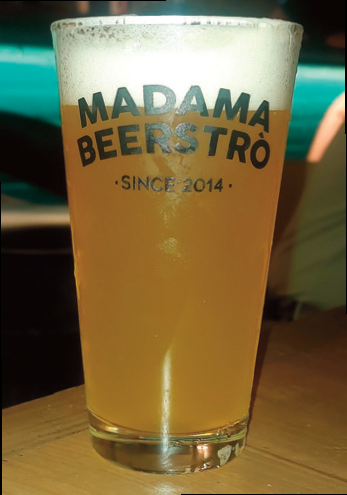
Our third port of call was Madama Beerstro, a vibrant bar in the university district on the eastern side of the city centre. Here I drank a double dry-hopped New England IPA from the Lariano brewery, south of Lake Como. This was predictably dry and robust, though didn’t quite taste its 6.7% ABV.
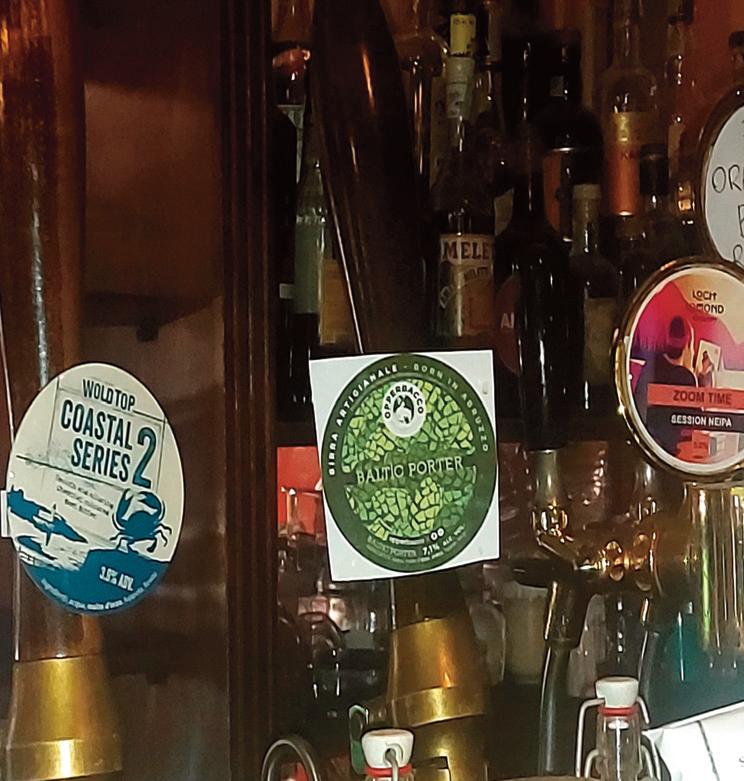
We’d been quite impressed with these three watering-holes, but better places were to come on subsequent evenings. On the north-eastern side of the city centre we found Lortica, a busy, basic bar with a dazzling choice of draught beers that included a pils, a weizen bock, a tripel, a sour ale and a Baltic porter, plus two ales from British breweries! Intriguingly, the Baltic porter and one of the British beers, Wold Top Coastal Series 2, were served from handpulls on the bar. I drank a tasty 6% ABV IPA which appeared to be a house beer brewed by the Rurale brewery near Monza, north of Milan. I then sampled the Baltic porter, from a small brewery called Opperbacco in central eastern Italy, north of Pescara. At 7.1% ABV this was a touch lightweight for a Baltic, tasting smooth and smoky.
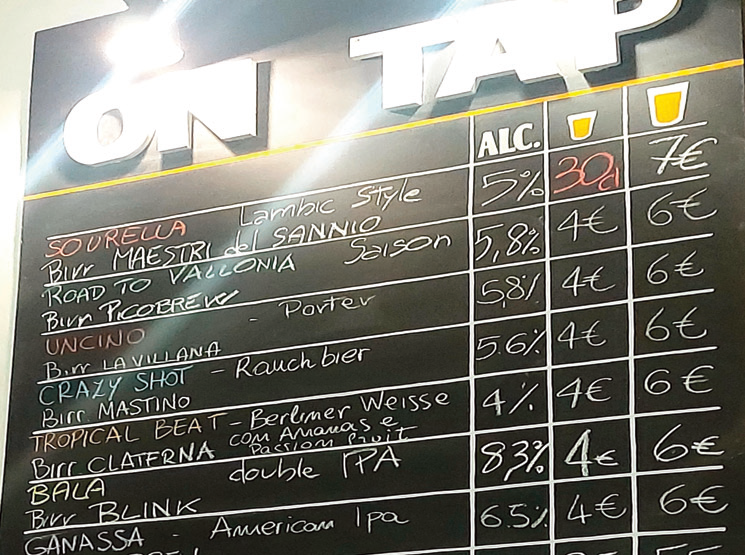
On our final evening in the city we visited what by consensus was our favourite drinking establishment of them all. This was Pub Il Punto, a friendly, neighbourhood bar on the western side of the centre which, like Lortica, boasted a remarkable beer board. This included a rauchbier, a lambic-style beer, a porter and two IPAs. I started with a 4% ABV Berliner weisse from the Claterna brewery, about 20 kilometres south-east of Bologna. Its tropical fruit flavours might offend the purists but it was pleasant enough.
My second beer was the king of all those I drank in Bologna, a 5.8% ABV saison called (pardon the pun!) Road to Vallonia from PicoBrew in Milan. This was a challenging drink, full-bodied with a dry spiciness. It set me up nicely for our best meal of the trip, just round the corner at Trattoria Da Me.
There were several bars (including at least one brewpub) that we didn’t get round to visiting, so Bologna may well have more treats in store. For any reader planning a trip there, do note that many of the bars don’t open until late afternoon and some are closed all day on Sundays. That at least allows plenty of time for sightseeing!
Mark Bravery