Both of these cases have something in common. Consequently I thought that they warranted separate coverage.
SIMPSON’S TAVERN
The venerable Simpson’s Tavern, off Cornhill was repossessed by its landlord, Bermuda based Tavor Holdings Ltd, on 16 October. The business, which describes itself as London’s oldest surviving chop house, dates back to 1757 and is housed in a Grade II-listed building, originally a pair of C17 houses. Appropriately, given that Christmas is coming, it is believed to be the model for the ‘melancholy tavern’ visited by Ebenezer Scrooge in Charles Dickens’ A Christmas Carol. It should not be confused with the restaurant, Simpsons in the Strand (currently closed but due to reopen in 2023).
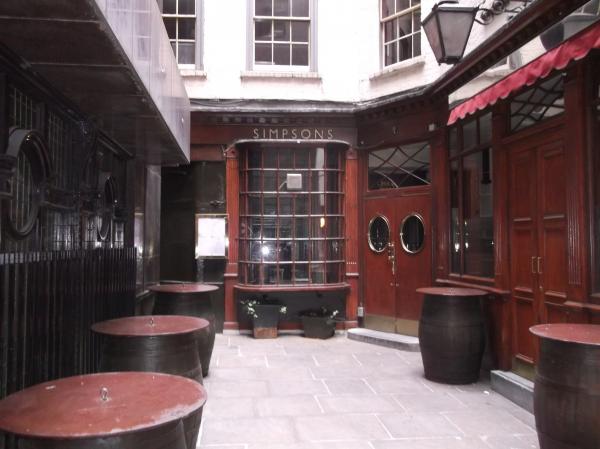
Like so many pubs and restaurants, Simpson’s had to close during the pandemic lockdowns and, with no income, they ran up rent arrears. Their situation was worse than most because of the time taken for the City to return to any sort of normality. They have however since been trading much as before and had even started taking Christmas bookings. They had been paying rent again since they reopened and the management assumed that payment of the rent outstanding from the lockdowns would be subject to negotiation. It appears that the landlord saw it differently. For the opinion of Simpson’s management on the matter, go to https://simpsonstavern.co.uk/ and look for ‘full statement’. I am not aware of any statement from Tavor Holdings Ltd to which I can refer you for balance.
It is understood that the freehold has been put up for sale and Simpson’s have launched a crowdfunding campaign in the hope of acquiring it. The last total that I saw quoted was £66,708 which is 17% of the target, which is reported to be £385,000. The campaign will end on 19 December. If you wish to participate, go here. This is for information; it is not a recommendation. A support group, the Friends of Simpson’s Tavern, has been set up and they are seeking an Asset of Community Value listing from the City of London Corporation. Given the existing restrictions on the property, its continued use as a pub or restaurant is, in any event, the most likely outcome. The City of London Corporation are unlikely to permit any redevelopment.
THE LEYTON TECHNICAL
This Antic operated pub in the High Road dates from 1896 and was originally a technical college (hence the name) and then became Leyton Town Hall. It is Grade II listed. It first opened as a pop-up pub during the 2012 Olympics and then became permanent. The lease is owned by Pubola Limited who have links to Antic.
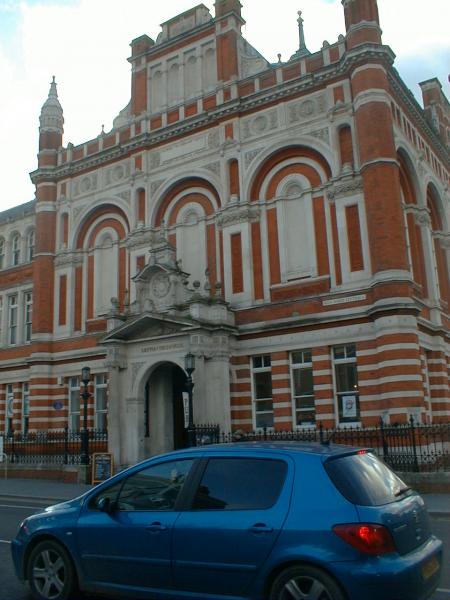
Similarly to Simpsons, it has also closed following its landlord, in this case LBC Leyton Limited, taking possession because of rent arrears that built up during the lockdowns. There is a statement on the pub’s website saying ‘We are temporarily closed due to matters currently out of our control. We hope to reopen as soon as possible’. The website also contains a copy of a letter from Pubola Ltd to LBC Leyton Ltd dated 13 September 2022 seeking arbitration under the Commercial Rent (Coronavirus) Act 2022 alongside the notice of possession from LBC Leyton’s agents dated 10 October 2022.
THE COMMERCIAL RENT (CORONAVIRUS) ACT 2022
It would appear that something has gone wrong. The Government expressed a hope that landlords and tenants could come to some arrangement over rent arrears that had arisen during the lockdowns and said that it expected landlords to make concessions. The above legislation was put in place, becoming law on 24 March 2022, to cover cases where this did not happen. It applied to a range of businesses, not just the hospitality sector, and was timed to come into effect to seamlessly replace the existing general moratorium on commercial evictions and restrictions on the recovery of commercial rent arrears in England and Wales. The Act continued the existing protection for six months so long as the debt in question was ringfenced as what was termed a ‘Protected Rent Debt’ arising from the period March 2020 to July 2021. During this six month period it was envisaged that an arbitration procedure would operate. Under this procedure, it was expected that tenants would be given time to pay, a reduced amount agreed or even the whole debt written off.
Clearly this has not happened in the two cases described above and I do not understand why. I must make it clear that I am not suggesting any malpractice on the part of the landlords. If anyone, including either of the landlords, can explain what has happened I would be most grateful.