Wetherspoon’s
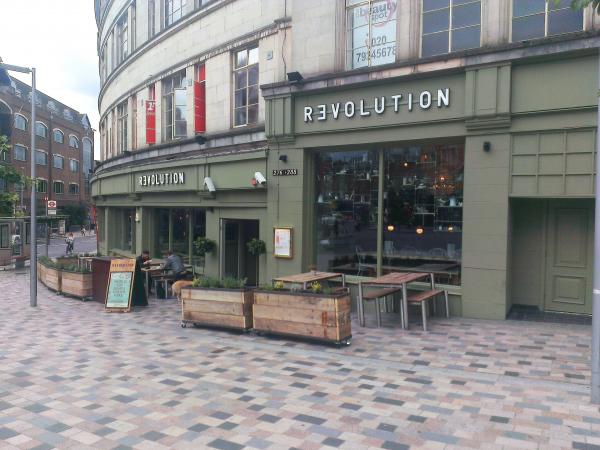
Further to my report on Revolution Bars in the last edition, their branch at Clapham Junction was one of the properties on which they were hoping to renegotiate the rent. It would appear that nothing came of that because, on 3 December, it reopened as a new JDW outlet called the London and South Western. The conversion reportedly cost £860,000 and, commendably, JDW retained 22 of Revolution’s staff members. See here.
It is, I suppose, fame of sorts. The Christmas edition of BBC Radio 4’s Dead Ringers programme included a sketch involving an impression of Tim Martin. It wasn’t particularly flattering but it did at least give a mention to the pub trade’s problems.
Meanwhile, the company’s genuine publicity will remain in the safe hands of Eddie Gershon’s company, Gershon Media Relations for a further five years. The contract gives it responsibility for running JDW’s press office, its public relations (both general and financial), crisis management and producing the in-house magazine, Wetherspoon News. Rather than the Brexit coverage to which we have become accustomed, the Winter 2020/21 edition has extensive coverage of COVID issues. Some of it makes for interesting – and controversial – reading. That said, there were complaints when certain selected pages were displayed in some pub windows. If you were not able to get hold of a copy of the 120 page printed edition, it is now available on JDW’s website.
Fuller’s
Fuller’s half-year results to 26 September showed a loss before tax of £22.2 million. Pubs were closed during this period for 14 out of the 26 weeks but, while sales in pubs outside London were 92% of the previous year’s figure, the situation in London was not so good. The company remains financially secure because of the value of its freehold estate. Chief Executive Simon Emeny commented, “We know our customers want to come back, we know they trust us to look after them and provide a safe and sensible environment to enjoy a great Fuller’s experience and, over and above this, we have a dedicated and passionate team of people with the ability and desire to delight, surprise and welcome back those customers. This business is armed with a well-invested and well-balanced, freehold estate, excellent people, robust financial foundations, a clear and consistent strategy, and the drive and desire to lead the way out of this crisis. The long term future for Fuller’s looks positive.”

Camden Town
AB InBev announced in November that Camden Town Brewery, which it took over in 2015 for £85 million, was to be fully integrated into the company’s UK business operation, Budweiser Brewing Group UK&I, as from January. Founder Jasper Cuppaidge is being retained as a consultant but when asked about possible job losses, an AB InBev spokesman said it would retain ‘most of the talent’ and that, “We are aiming to reduce any potential total impact to a minimum by reviewing alternative opportunities for any employees within the company.” No doubt the dreaded synergies will strike again. Production will continue at Camden’s existing sites in Enfield and Kentish Town.
Mitchells & Butlers
The operators of the All Bar One, O’Neill’s and Harvester chains may have to ask investors for emergency funding. A report in the Guardian on 8 January said that the company’s cash reserves were down to £125 million and, despite all their outlets being closed, they were facing costs of £40 million per month and had a £50 million debt repayment coming due on 15 March. The article says that Joe Lewis, the majority shareholder in Tottenham Hotspur Football Club, and racehorse owner John Magnier, who between them own nearly half of M&B’s shares, approve of the move. The view of one analyst was that, “Longer term, with a mainly freehold, well invested estate, M&B looks well placed to capture market share from a damaged hospitality sector.”
Oakman Group
Encouragingly, the Oakman Group, which operates 27 pubs in the south of England and the West Midlands, is looking to expand. They currently have one pub inside the M25, the Beech House in Hampton Hill (TW12 1NY). Historically, the company has raised capital informally from private investors but now it is planning a share release to raise £4.5 million. The aim is to have an estate of around 50 pubs by 2026. If they are successful, they should not have any problems in finding pubs to buy, so long as they can get there ahead of the developers. See also Health and wellbeing.
Blackrose look to expand
Blackrose, the pub management company owned by property investment company, Aprirose, have engaged the prominent hospitality sector agents Fleurets to add to their portfolio of 41 pubs. They are particularly looking to move into ‘affluent and cosmopolitan’ suburban London. Their targets are large pubs with a food offer, or the potential to add food and preferably with an outside area. Blackrose were reported to be leading the bids for the 42 pubs which the Competition and Markets Authority required Stonegate and Ei to sell following Stonegate’s takeover of Ei.
Brain’s
This, sadly, is a tale of our times. On 14 December, Chief Executive Alastair Darby, previously of Cameron’s, Marston’s and Mitchells & Butlers, announced that the company had sought advice from investment banking advisers and, as a consequence, was effectively up for sale. Mr Derby had previously told BBC News, “You know, you can’t just keep chipping away at an industry, knocking it down, expecting it to get back up again in great shape. Every time we lose turnover, we lay off people, we have to close pubs, sell pubs, the business gets smaller and weaker, and that will be not just us, that will be affecting everybody in this sector.” This was before the ‘firebreak’ lockdown in Wales in early November. The outcome however was a quite different arrangement. Marston’s, now, of course, a pub owning business, are to rent Brain’s portfolio of 156 pubs (101 managed and 55 tenanted). Marston’s already have 106 pubs in Wales. The pubs will remain branded as Brain’s and will continue to serve Brain’s beers.
Nik Antona, CAMRA’s National Chairman said, “Restrictions over the last year due to COVID-19 have put a huge pressure on the hospitality industry. It’s clear that there has not been enough support to protect even a well-established business such as Brains, never mind smaller pubs, breweries and cider producers across Wales. This could be the first of many hospitality businesses forced to take drastic action to survive. The UK and Welsh Governments must work together to provide the industry with further financial support now or we anticipate that there will be even more job losses and closures.” It is expected that the transfer will be completed in February.
In the necessary statement to the Stock Exchange, Chairman John Rhys said, “This agreement marks the formation of a lasting strategic relationship with Marston’s which secures the future of Brains’ pubs and 1,300 of our employees within them. We know and trust Marston’s to be excellent custodians of our pubs and, whilst this is not a decision we have taken lightly, we are confident that both our pubs – and our pubs teams – will thrive under their stewardship. Furthermore, this transaction enables Brains to recapitalise its balance sheet and continue its long heritage as an independent entity, preserving this great Welsh business for generations to come.”
The original reports suggested that Brain’s would continue to brew but, at the beginning of January, came reports that the brewery, which is only two years old, would close with Brain’s beers being produced ‘somewhere in England’. Marston’s are, of course, junior partners to Carlsberg UK in the Carlsberg Marstons Brewing Company. I would have expected CMBC to become involved in supplying Brain’s pubs in some way anyway and they must be the logical candidates to take over brewing the Brain’s brands. A sad end of 140 years of brewing history.
Restaurant Group buys back pubs
Last March, the Restaurant Group (TRG) put the pub chain Food & Fuel, acquired in 2018 for £14.9 million, into administration. They have now agreed to buy three of the eleven sites from the administrator for £895,000. These are the Queens in Crouch End and the Queens Arms in Pimlico, plus a Coco Momo café bar in Kensington. The Roebuck in Chiswick was acquired in a subsequent deal. TRG also own the Brunning & Price chain, to which TRG transferred the Steam Packet in Chiswick, which wasn’t included in the administration. All of the other F&F sites have been sold as going concerns, mostly to Market Taverns, with two leased sites returning to their freehold owners.
BrewDog
BrewDog acquired the London based Hawkes Cider in 2018 and transferred production to one of its sites in Aberdeenshire. Co-founder and Chief Executive James Watt has however now admitted that this was a mistake. He said in a Linkedin post that they had ‘ripped the soul’ out of the company because its main selling point was that it was made in London, with apples pressed fresh on site. Consequently, production is to return to London in expanded premises. Well done them for admitting that they were wrong.
Intelligent kegs
A company called the Smart Container Company Ltd, based in Pontypridd, South Wales, has come up with an idea which they hope will reduce wastage in the brewing industry, currently estimated at £5 billion per annum. The device, called KegTracker, is attached to a keg or similar container and, using artificial intelligence (AI), provides monitoring information in ‘real time’ on the state of the keg and its contents in order to avoid spoilage along the supply chain between brewery and pub. The company’s vision is to ‘eliminate waste, contributing to a sustainable future’ and I’m sure that the industry will welcome any cost saving initiative in these difficult times. The system was developed with the assistance of a Government investment grant.