As well as for promoting best-quality beers and ciders, CAMRA is well known for its support of pubs. In particular, it is widely well regarded for its work on identifying and helping to protect the UK’s most historic pubs through the creation, from the 1990s, of its inventories of pubs with historic interiors, detailing the most precious survivors.
CAMRA defines heritage pubs as those that are wholly or mostly unchanged or retain important historic rooms or features from before 1970. Since then, huge numbers of pubs have been refurbished and many have been established in buildings previously used for other purposes and, contrary to popular belief, a lot of new pubs in both urban and rural locations are really good. They deserve to be recognised and applauded.
Consequently, CAMRA is going further to help protect our pub heritage by identifying those pubs that have been blended well into historic buildings. It is also identifying pubs that have been either taken back to show how they might have been years ago or have design qualities that enhance the pub experience.
This project aims to identify, preserve and protect pubs that are outstanding conversions and restorations. They are the best examples of pub companies and individuals taking care to present a pub for modern times whilst honouring the origins of the building in which it is operating or taking care to recreate a pub that reeks of history or has design to admire. All pubs included have that essential quality of, well, ‘pubbiness’.
WHY IS CAMRA DOING THIS?
1. To raise awareness of examples of outstanding pub conversions and restorations, thus stimulating interest in visiting and enjoying them.
2. To inspire pub owners and others to pursue excellence when converting or restoring buildings for pub use.
3. To thereby establish yardsticks against which future pub conversions and restorations can be judged.
4. To help protect identified pubs from unsympathetic changes.
5. To contribute to CAMRA’s wider objective of generating enthusiasm for pub-going.
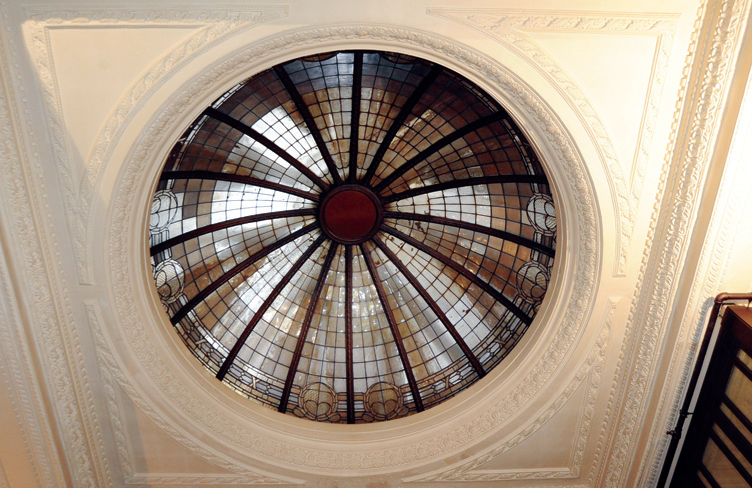
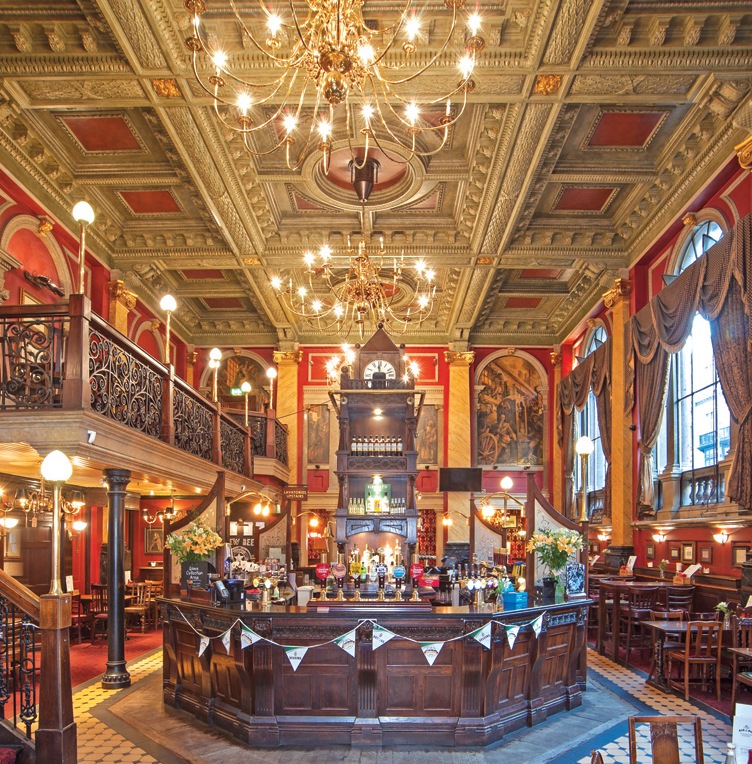
There are eleven pubs in the London area that have interiors of outstanding architectural or design quality in a building that was not previously used as a pub. These range from basic to those that glory in the splendour of their surroundings. In the City, there are old banking halls to marvel at, such as the Crosse Keys near Liverpool Street, a palatial Wetherspoon’s in the 1913 HQ of Hong Kong and Shanghai Bank. It is a sumptuous building filled with marble, tile and mosaic flooring and Doric columns topped by spectacular domed skylights. Similarly the Old Bank of England, at the top of Fleet Street, is the site of, you guessed it, the old Bank of England premises built in 1888 and sensitively refurbished. Murals reference the rich history of the area and there are ornate high ceilings and chandeliers.
At a less grand scale, the Jerusalem Tavern in Clerkenwell is a merchant’s house dated 1719 which became a coffee shop and was converted by St Peter’s Brewery into a three-roomed pub that recreates an 18th century tavern. It has a well preserved wooden shop front while the decor is wooden floors and plain walls, with wooden chairs and tables, all done in a nicely understated way that delivers genuine pub atmosphere.
Out of town, the Leyton Technical occupies a building in the Victorian classical style that was originally built as a technical college and then became Leyton Town Hall. It is a first rate restoration by Antic with several rooms with interesting features, plus some mosaic flooring.
The Partridge in Bromley is in a former NatWest bank, now a Fuller’s pub retaining many original features including the high ceilings and chandeliers. This classy conversion includes a gorgeous bar back and small snugs off the main bar.
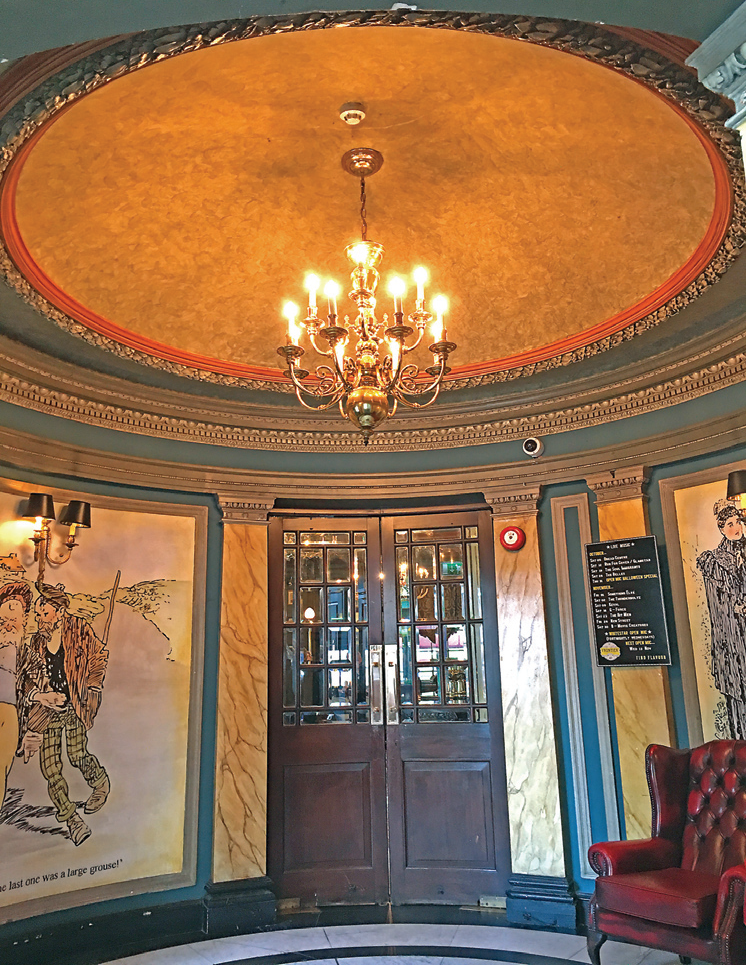
The eleven pubs under consideration include several Samuel Smith’s houses This company has done a wondrous job of restoring several pubs to their former glory. Perhaps the best is the Fitzroy Tavern in Fitzrovia. The building started life as a coffee house and became a pub in the late 1800s. It has been returned to close its original pub condition in a fantastic transformation. A large island bar serves six drinking areas with screens, some connected internally. There is a profusion of etched glass, mirrors, tiles and wood panelling. The pub has a distinctly bohemian history, frequented by literary figures, artists, musicians, politicians and many other notables. Another Samuel Smith’s pub on the list is the Crown & Sugar Loaf, just off Fleet Street.
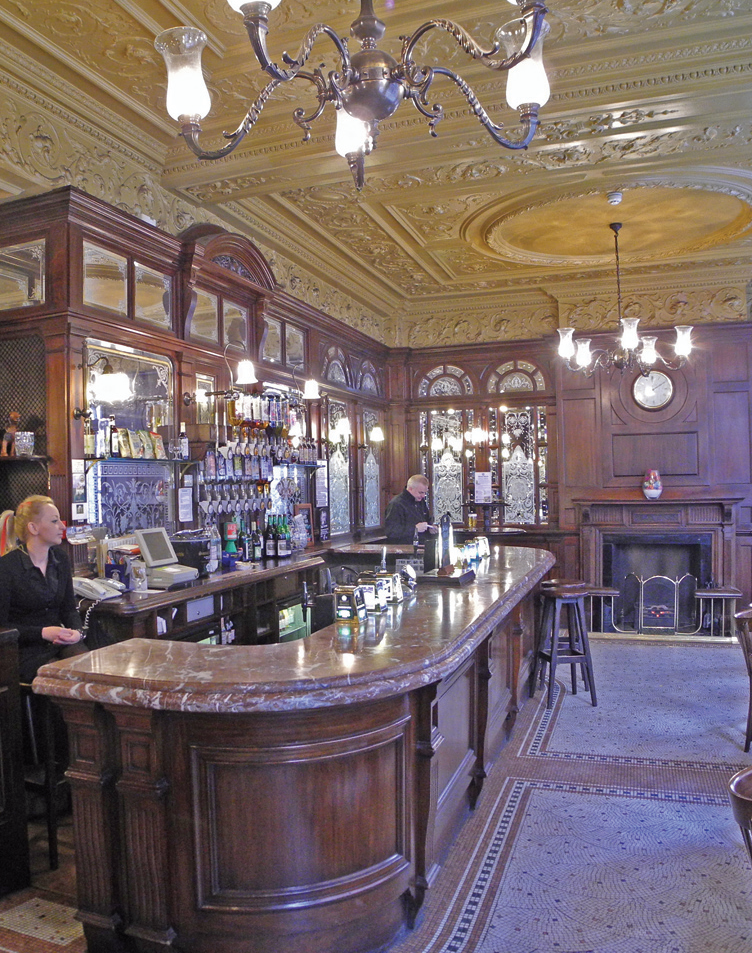
Another good example is one of only three Harvey’s houses in London. The Royal Oak at Borough has been carefully restored to how it might have been as a Victorian corner pub. Two bare-boarded bars are separated by an off sales area. The partitions have good quality glass and bar fittings. Prints and old photographs adorn the traditional interior.
So these are some examples to pique your interest. You can find out more about this project and see the entire listing of 117 pubs nationwide by going here. Go and enjoy as many as you can. This is a live project and so if you know other pubs that should be included as outstanding con- versions or restorations, please let us know at conversionsandrestorations@pubcampaigns.camra.org.uk. Enjoy!!
Gerry Hahlo, Project Co-ordinator
With thanks to Michael Slaughter LRPS for the photographs
Editor’s note: The photo of the Old Bank of England was taken when it was a Fuller’s house. It is now operated by McMullen’s. The full addresses of the pubs mentioned can be found using WhatPub