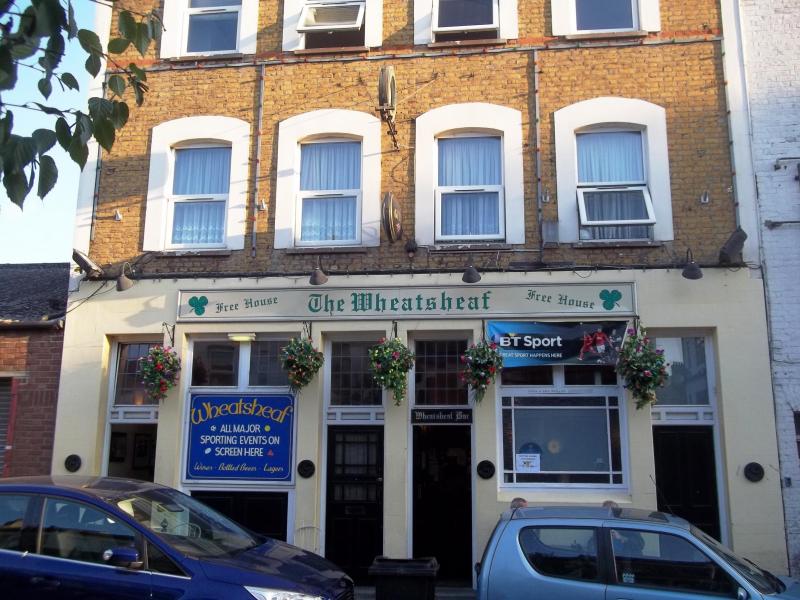
On 15 October, CAMRA’s London Pubs Group had a daytime tour focused on historic pubs in Stoke Newington. The tour commenced at the Wheatsheaf in Windus Road. This is a simple, traditional local, now with an Irish flavour. It consists of two bars (public on the left) either side of a servery and with a large rounded arch at the rear linking the two. The internal decor is somewhat hard to date but is probably from an interwar refit and includes attractive red and cream tiling at the foot of the panelled bar counters. There are also Illuminated fascia to the bar backs which advertise the former Whitechapel brewers Mann & Co (merged with Watney’s in 1958). There is no real ale available here, although keg Beavertown Neck Oil is served. Not all participants were able to start the tour here because the pub opened at 1pm instead of midday as expected. The pub is on CAMRA’s London Regional Inventory of Pub Interiors of Special Historic Interest (hereafter LRI).
No such problems were encountered at the next stop, the Rose & Crown in Stoke Newington Church Street which sweeps majestically around a corner. It is an ambitious pub dating from 1930-32 and built to the design of A E Sewell (1872-1946), who was the principal architect for the east London brewers Truman, Hanbury, Buxton and Co Ltd. The pub replaced an earlier establishment lost through road-widening. Exterior features to note are the lamps, a pair of fine metal inn signs and glazed shop windows to display the wares from the former off licence.
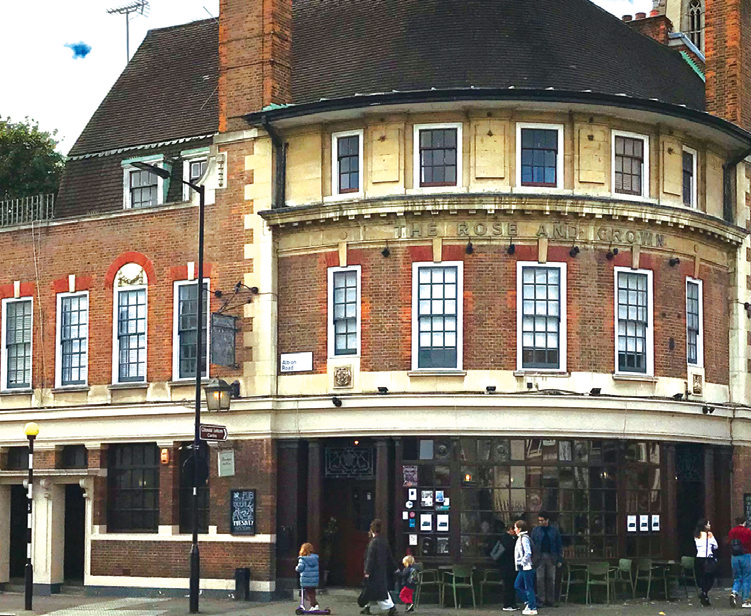
You can trace the sequence of original rooms using the metal signs over the doors, going right to left: public bar, private bar, outdoor sales, saloon, and lounge. Internally there is still a good feel of the 1930s layout, since the screens dividing the various rooms survive in their upper parts. Also, the detailing of the counter is different in the public bar area from the private bar and, unlike the rest of the pub, the lounge part has hatch-style service.
Extraordinary as it may seem, the light shades appear to be original and different parts of the pub have different shaped shades. The panelled interior is in the classic Truman’s style of the 1930s. Characteristics include advertising lettering on the paneling that name some of the brewery’s offerings, the chequered spittoon trough, light cream coloured Vitrolite panels in the ceiling, overmantels with Truman’s mirrored inserts and doors in the bar counter to get at the beer engines. Cask ales served regularly here include Butcombe Original, St Austell Tribute and Woodforde Wherry. Only card payments are accepted. The pub is Grade II listed and is also on CAMRA’s LRI.
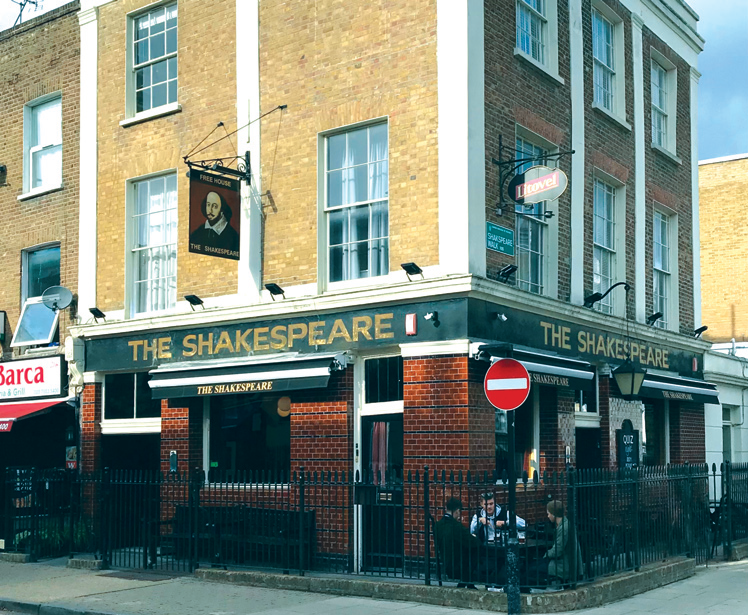
The next pub was a short bus ride away. The Shakespeare, 57 Allen Road is not a listed building but is on CAMRA’s LRI. The three storey exterior is of London stock brick, with a ground floor of mainly brown glazed brick with some black narrow banding. This immediately marks it out as being from the former Whitbread estate, who were fond of using this feature. There is a lobby with mosaic ‘Shakespeare’ floor tiling and a large vestibule with etched glass panels. Another entrance also has a ‘Shakespeare’ mosaic floor, a full height vestibule and a ‘Luncheon Bar’ window. The interior is bare-boarded with an island servery and the overall look is typical of that used by the Remarkable Pubs chain. Five Points XPA, Shepherd Neame Whitstable Bay and Timothy Taylor Landlord are normally available here.
The fourth venue was the Mildmay Club at 33-34 Newington Green). The club was founded on 18 August 1888 as the Mildmay Radical Club and was originally located at 36 Newington Green Road. The club was actively involved in radical politics and social campaigns. In 1894 it moved to its current premises. Membership of the club rose from 1,000 in February 1896 to 2,400 in January 1899, eventually peaking at 3,000 members. It was recognised as one of the largest and most politically active of the capital’s working men’s clubs. On 27 October 1900, the foundation stone was laid for a new clubhouse designed by a member of the club, the architect Alfred Allen. The new building, which may have incorporated fabric from the existing houses on the site, included two halls, a reading room, meeting rooms and a billiard hall. In 1930 it changed its name to the Mildmay Club & Institute and became non-political. In line with many working men’s clubs, it concentrated on providing entertainment facilities for its members and, by the 1950s, it was staging weekly variety shows. The building was renovated in the 1970s. The front entrance retains its original double doors which lead to a small entrance lobby with a modern glazed screen. Beyond this, the main entrance hall has late C20 finishes and a suspended ceiling.
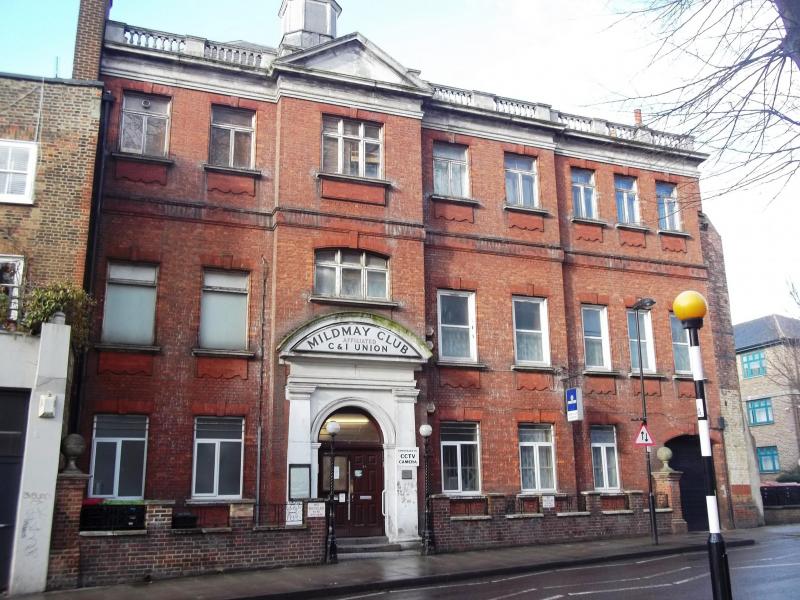
The main bar area, on the ground floor of the link block, has a late C20 suspended ceiling, decorative finishes, fittings and a bar counter with a mirrored bar back. Steps descend to a large snooker hall on the ground floor and this accommodates nine snooker (actually, billiard) tables. Above the snooker room is the main hall/theatre. This has a stage at the northern end and a gallery at the south. A suspended ceiling was installed in the late C20 but the original boarded ceiling with its metal trusses survives above it. The side walls, finished with late C20 dado height panelling, have pilasters which originally supported a decorative cornice. Blind arches between the pilasters originally contained murals of historical subjects. These arches have been infilled but it is possible that the murals survive beneath. The side walls have fixed late C20 banquette seating. Originally, the hall had fixed theatre seating but this was subsequently removed and there is now a C20 sprung wooden dance floor. The LPG party were given an extensive tour of both the public and non-public parts of the building by the club’s enthusiastic vice-president (and CAMRA member) Laurence Fryer. No real ale is sold here, primarily because the daily fluctuations in the number of members’ attending would not allow quality to be maintained.
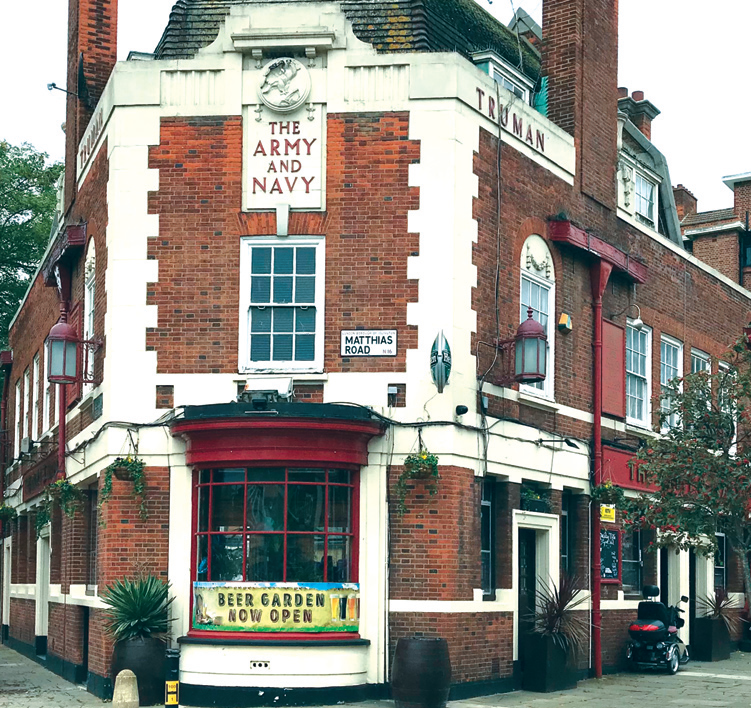
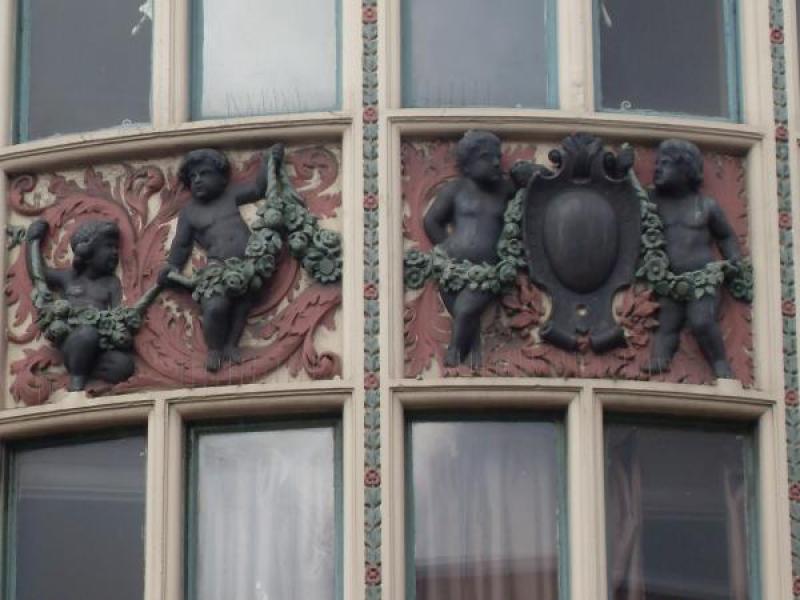
The next port of call was the Army & Navy at 1 Mathias Road. Like the Rose & Crown, this pub is Grade II listed and on CAMRA’s LRI. This wedge-shaped, red brick pub was one of many rebuilt by Truman’s in the 1930s to upgrade the quality of their estate and it remains a good place to see something of their house style. Outside there are ironwork pub lanterns, a bow fronted window and attractive window glass, with dimpled panes and pretty coloured strips. As with the Rose & Crown, the interior displays typical trademarks of Truman’s inter-war fitting and furnishings. There is characteristic advertising lettering, brick fire surrounds with small relief panels (in this case a hunter and dog, a knight on horseback, and a couple of galleons) and a very distinctive creamy coloured ceiling made up of Vitrolite panels (similar to the Rose & Crown). Originally the pub would have been divided into a sequence of separate rooms by screens but these have now all gone. You can however still see two different treatments in the bar counter detailing, signifying separate drinking areas (the usual distinction being plain for the public bar, smarter for the rest). The bar-back is also original. The pub was opened in 1936 and was probably also designed by the above mentioned A E Sewell. Again, no real ale is available here but Beavertown Gamma Ray and Neck Oil are normally served on keg.
Pub number six was the Rochester Castle at 143-145 Stoke Newington High Street. This pub is also a Grade II-listed building and on CAMRA’s LRI but it has lost its original partitions and the bar counter has been moved back against the north wall. The compartmented ceiling is carried on slender cast iron columns. The front part of the side walls still retain their glazed tiling with arabesque enriched pilasters and mirrors. Figurative panels depicting the seasons, set within borders, remain in situ along the north wall. To the rear there is a top-lit extension, with a Jacobethan style frieze beneath the (renewed) lantern. The pub is in CAMRA’s Good Beer Guide. Greene King Abbot and IPA, Sharp’s Doom Bar and six changing guest ales are normally served here. The guests may include beers from East London Brewery, Portobello and Redemption breweries. At least one real cider may also be available. The pub was known as the Tanners Hall for some years due to a previous bad reputation but this is all happily in the past and the Rochester is now one of the oldest Wetherspoon outlets operating.
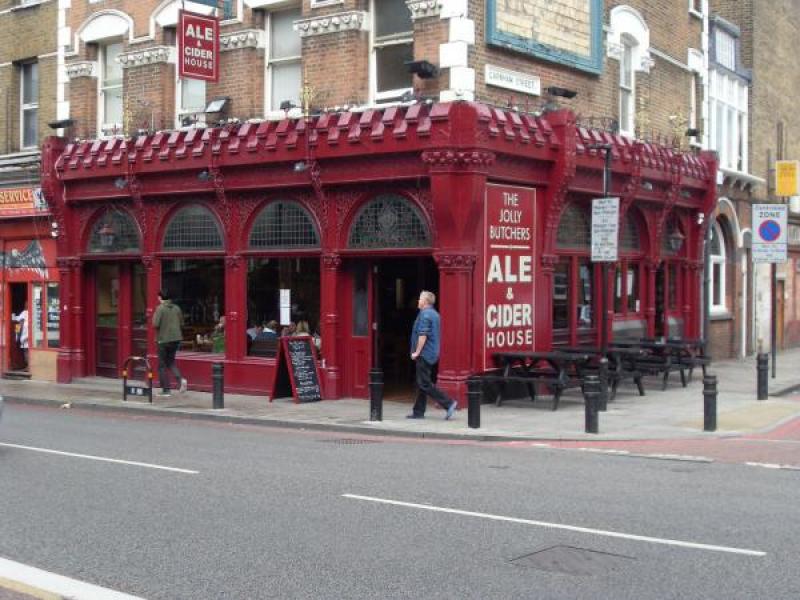
The tour concluded at the Jolly Butchers at 204 Stoke Newington High Street. Though not a listed building or on any CAMRA inventory, this mid-19th century former Truman’s pub has retained its fine half-moon windows, pierced spandrels and cast-iron pillars, as well as some wonderful iron brackets outside. One changing real ale and two real ciders in boxes are usually served here and the staff were happy to put on a new one after the barrel ran out. Only card payments are accepted here.
All in all, a tour that took in some of the most historic pub and club design features in north London.
Jane Jephcote and Kim Rennie