FULLER’S BREWERY AND DARK STAR
As we went to print, news was coming through that Asahi are closing the Dark Star site at Partridge Green in Sussex and transferring brewing to the Meantime site in North Greenwich. This is scheduled for 31 December. Dark Star, which began life in the cellar of the Evening Star in Brighton, were acquired by Fuller’s in 2018. Asahi acquired Fuller’s in 2019, having already acquired Meantime from SABMiller in 2016.
Meantime have not been producing cask beer for some time and so some adjustments will need to be made if the Dark Star cask beers are to continue. It is understood that Hophead is currently being brewed at Fuller’s main site in Chiswick. It is not known whether that will also move to Greenwich, alongside APA, Dark Star Original, Revelation and, recently, Prize Old Ale.
In a statement released on the Dark Star twitter account, “This is not a step we have taken lightly, however there are significant challenges in the current economic and operating environment that make this the right course of action for the business and the brand. The Dark Star site operates significantly below capacity which is unfortunately not sustainable. We believe strongly in Dark Star and remain committed to building for its future success. The Dark Star beers will remain exactly as they are today; brewed to the same recipe and taste expected by its loyal fans, whilst retaining its distinct visual brand identity.” Consultation has begun with those employees likely to be displaced.
JD WETHERSPOON NEWS
On 7 October, JDW released their accounts for the year to the end of July. They registered a loss of £30 million, with sales down by 4.3% to £1.74 billion. This was an improvement on the £154 million loss last year but, before the pandemic, annual profits had been in the £100 million range. There will be no dividend for 2021/2022. According to a subsequent report on the 14 weeks to 6 November, sales have improved on last year and were almost as good as 2019. This was reported as being ‘broadly in line with expectations’, although the company is concerned about the cost of such items as staff, food and repairs. There have been reports of a shortage of eggs for the breakfasts! The company is also taking action to control its corporate debt (£745 million in November) in the light of increased interest charges.
Shortly before the October report, JDW had announced that they plan to dispose of 32 pubs and then added a further seven when the November figures were announced. 14 of the original list are in the London area, plus two more in the additional seven. These are shown in the table overleaf. Overall, there are 24 leaseholds and 15 freeholds. A possible explanation is that JDW wish to dispose of those pubs for which they have to pay rent, seeing this as avoidable expenditure. The freehold pubs, presumably, are underperforming, although that seems unlikely in the cases of the Penderel’s Oak and the recently purchased Coronet.
To put this in context, JDW have always ‘churned’ their pub estate and, given that they have well over 800 pubs, this disposal is just 4% of their outlets. Already this year they have raised £1.9 million from the sale of five pubs. That said, it isn’t trivial if the only pub in your area is one of those which is closing.
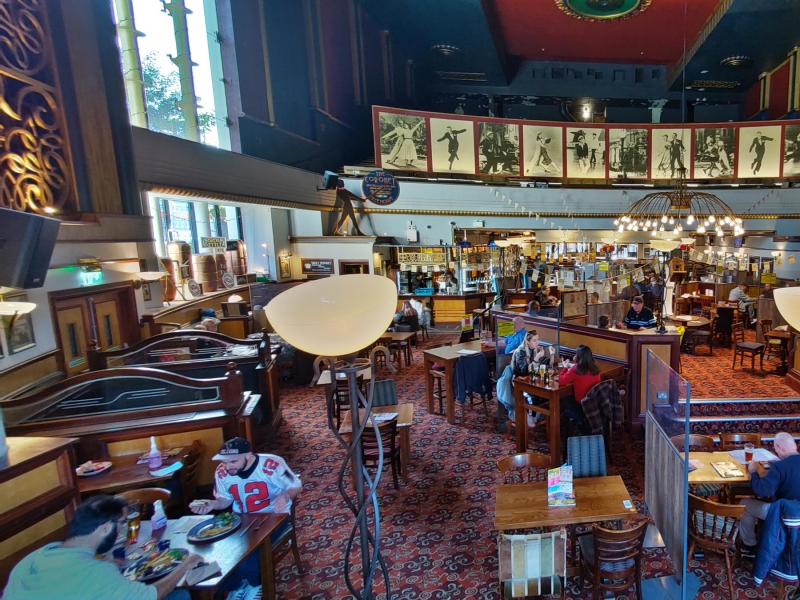
For the ten London pubs where information is available, three of them are freehold: the Toll Gate in Hornsey, the Asparagus in Battersea and the Coronet in Holloway. With the Asparagus, JDW recently opened a new pub at the other end of Falcon Road, closer to Clapham Junction station, so this might just be ‘duping out’. Likewise with the Plough & Harrow, given that they have another site in Hammersmith (and had previously been put on the market).
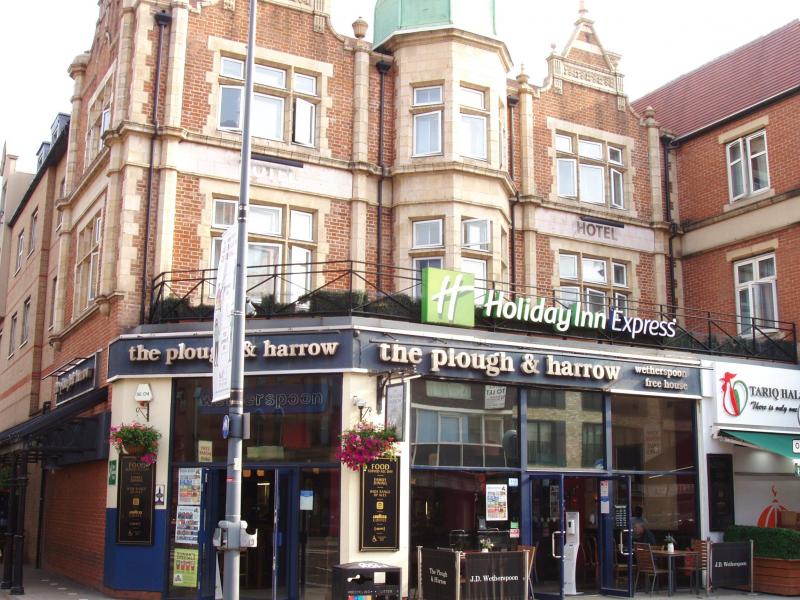
Five of the London pubs are listed in CAMRA’s 2023 Good Beer Guide. It was too late to take them out and, in any event, they may well still be open for most of the coming year because JDW have said that they will stay open until sold. Also on the disposal list is the pioneering Hope & Champion, the pub at the Beaconsfield motorway service area on the M40.
The pubs are available as one package, which seems unlikely, smaller packages or individually. Despite the economic climate, there are still pub companies, RedCat and Stonegate for example, with funds available.
Some of the funds raised will be going on a new project, the Stargazer, a 3,800 square foot beer garden in the O2 Entertainment District in North Greenwich. JDW are reportedly investing £3 million in the site.
Meanwhile, JDW are continuing with their plan to convert the former TGI Friday site in Covent Garden into a pub. Their application for planning permission for change of use went before the City of Westminster’s planning committee on 1 November. Officers recommended that it be granted but local residents continue to vehemently oppose the plan. A decision was still awaited as we went to print.
Wetherspoon’s pubs for sale (in alphabetical order of location)
- Asparagus, Battersea
- Wrong ‘Un, Bexleyheath
- Miller’s Well, East Ham
- Bankers Draft, Eltham
- Hudson Bay, Forest Gate
- Capitol, Forest Hill
- Plough & Harrow Hammersmith
- Moon on the Hill, Harrow
- Penderel’s Oak, Holborn
- Coronet, Holloway
- Toll Gate, Hornsey
- Angel, Islington
- Last Post, Loughton
- Alfred Herring, Palmers Green
- Foxley Hatch, Purley
- World’s Inn, Romford
- Colombia Press Watford
CARLSBERG MARSTONS BREWING CO
Having already closed the Jennings brewery in Cumbria, CMBC have announced the sale of the Eagle Brewery in Bedford. This was originally the Charles Wells brewery which then became the Wells and Youngs Brewing Company. After the WYBC was dissolved, Wells sold it to CMBC in 2017, in advance of the opening of their new Brewpoint site north of Bedford.
The new owner is the Spanish brewery SA Damm and it is their first venture beyond mainland Europe. CMBC and Damm have existing links, with CMBC having been packaging and distributing Estrella Damm at Bedford for some years. All 67 jobs at Bedford will be retained. Although Damm are no longer family owned, they are free of any financial connection with any of the multinational breweries. The price has yet to be made public.
The deal specifies that Damm must continue to brew the existing range of beers so that CMBC can still have them in its sales portfolio. This, presumably, includes the Young’s brands.
YOUNG’S
Young’s have reported that sales in central London and the City increased by 22% and 11% respectively over the six months April to September. This equated to an increase in sales of £187 million, with pre-tax profits rising to £25 million. Chief Executive Simon Dodd, who took over from Patrick Dardis in July, told the Evening Standard (10 November), “Central London, the West End and the City continue to bounce back. Tourists are back, corporate bookings are back and people are working from home less. We’re seeing more like four days in the office now. We’re really cautiously optimistic.”
Young’s have acquired two more pubs, the Griffin Inn, a 16th century coaching inn in Fletchling, East Sussex and the Carpenter’s Arms in Tonbridge, Kent. Both have letting rooms and were acquired from private ownership. This brings Young’s estate to 226.
FULLER’S PUBS NEWS
On 17 November, the pub company released its results for the half-year ended 24 September. Revenue increased to £169 million, with sales up by 20% overall and, significantly, by 67% in central London. Profit before tax was £9.8 million, with £12 million being invested in their estate. Discussing the seven weeks since these figures, Chief Executive Simon Emeny told the Morning Advertiser, “As commuters return to their offices and international tourists once again visit the capital, our central London and city sites have seen like-for-like sales for the first seven weeks of the second half rise by 20% against the prior year, despite the impact of tube and train strikes. While we look forward to our first Christmas free of restrictions for three years and the added bonus of a FIFA World Cup, we are trading in an increasingly challenging environment. Cost pressures from energy bills, wage and food inflation and increasing interest rates continue to impact us and all businesses in the hospitality sector. Our teams are working hard to manage these pressures while ensuring we continue to deliver an outstanding experience for our customers.” It is reassuring to note the similarity with what Young’s reported.
SHEPHERD NEAME
Sheps are also recovering. In the year to June they made a profit of £7.4 million, compared with a £16.4 loss in the previous year and sales over the summer were up 10%. They will be paying a dividend. Chief executive Jonathan Neame told the Evening Standard (28 September) that sales in London pubs had been down as much as 30% during the year as compared to before the pandemic but this had recently reduced to 11%. He said, “We feel much more optimistic this year than we did last year for our prospects.” The article specifically mentioned some pubs, including ‘The Cheshire Cheese off Fleet Street’.
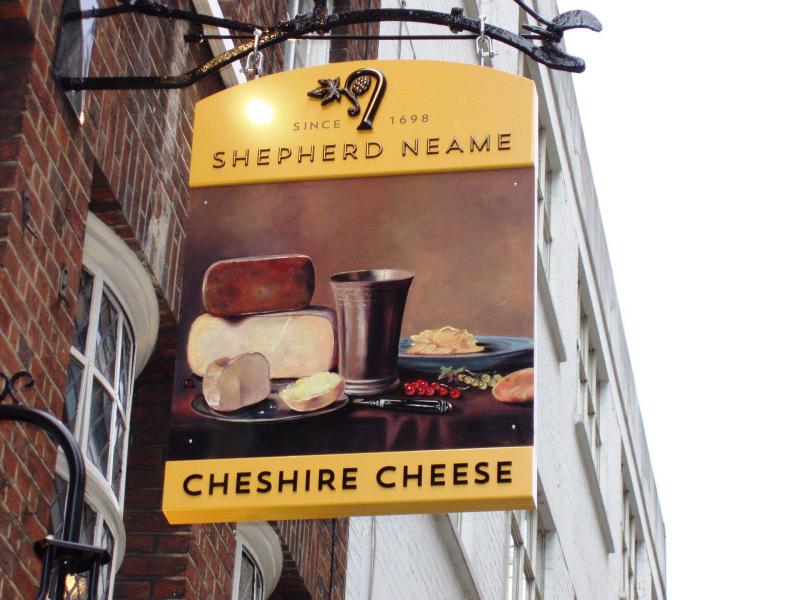
In case anyone was confused, this refers to the one in Little Temple Street a Grade II-listed building which recently reopened. The ‘famous’ one in Wine Office Court, correctly the Olde Cheshire Cheese, is further down Fleet Street and is run by Samuel Smiths. There is a third, a Stonegate house, in Crutched Friars.
MARSTON’S DISPOSALS
There was a report in the Evening Standard of 11 October that Marston’s are looking to dispose of what they call ‘lower-end, non-strategic sites’. No numbers or locations were given but chief executive Andrew Andrea said that this was unlikely to include any sites in London because ‘they’re still performing pretty well’. The company reported that they were nearly back to pre-2019 sales levels but were particularly concerned about energy costs and they were not alone in hoping for a ‘World Cup bounce’.