In 2016 the London Borough of Wandsworth was the first local authority in the UK to bring in measures to protect its most important pubs from redevelopment, leading it to be dubbed the ‘UK’s most pub-friendly borough’. Using Article 4 Directions, changes to pubs in the borough had to go through the planning process, rather than being automatically allowed under permitted development rules. This meant they could no longer be converted into other uses, such as mini-supermarkets, without the owner first obtaining planning permission.
In common with so many places, in recent years Wandsworth has lost several much cherished pubs in their neighbourhoods, across Battersea, Putney and Tooting; in 2015 Wandsworth Council resolved to do something about this.
Historically, it had been possible to make changes to public houses without requiring permission. In August 2016 Wandsworth Council made an Article 4 Direction to withdraw permitted development rights (change of use, demolition and alteration) from 120 sites in Wandsworth. This ensured planning permission was required for any such changes to these 120 identified pubs. The 120 bars and pubs were chosen for their historic or architectural value, reputation as music venues and contribution to their community and neighbourhoods. Some pubs that were closed at the time were still given protection with the intention that this would give added incentive to the owners to bring them back into use. Having pioneered this approach, Wandsworth expressed the hope that ‘other councils will follow our lead by adopting pub-friendly planning policies and then stripping away permitted development rights from their local inns, bars and taverns. This could be a real turning point for our nation’s superb but vulnerable pub trade and Wandsworth is more than ready to share its approach with other authorities’.
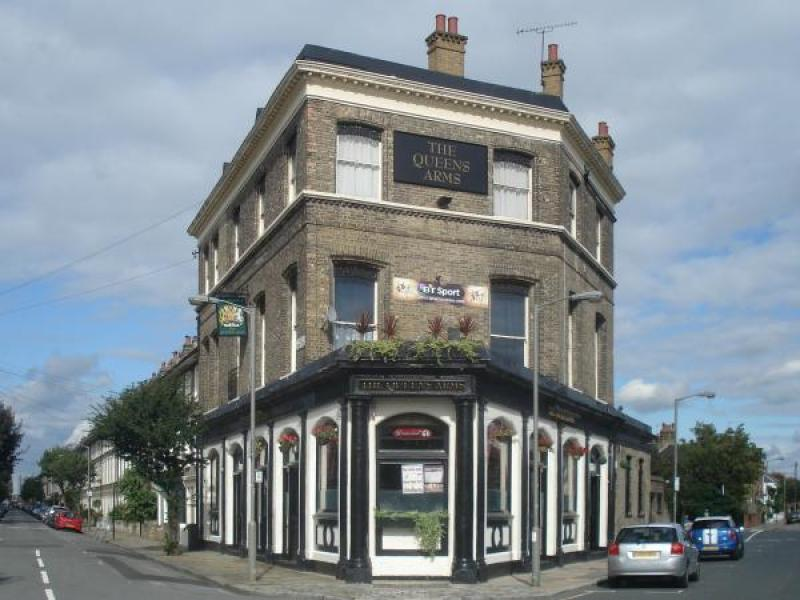
An example of the direction and other Local Plan policies having a rapid impact is the Queens Arms, St Philip Street, Battersea (SW8 3SS). A change of use application was withdrawn due to the added protection, combined with local listing and conservation area status and a subsequent application was submitted retaining the pub use on the ground floor. This is one of many and, by 2019, employment in Wandsworth’s pubs, particularly smaller neighbourhood pubs, was growing more strongly than any other London borough.
Policy guidance at national, regional and local levels now recognises the community value of pubs and sees them as an essential element in achieving sustainable communities and lifetime neighbourhoods. The importance placed on the community value of public houses is shared by local residents, some of whom have felt so strongly that they’ve campaigned to protect pubs from redevelopment through the planning system. Mechanisms such as the Asset of Community Value designation have been successfully pursued by groups in the borough. Indeed, this was one of the inspirations for the policy.
Following the success of the Article 4 Direction in Wandsworth, both Southwark and Windsor & Maidenhead councils introduced something similar, citing Wandsworth as a leading example. Wandsworth’s move generated considerable media interest at the time, not just in the UK but from as far afield as the USA and Australia.
Wandsworth’s policies also led the way nationally, with a change to permitted development rules introduced across the UK. The Government put forward amendments to the Neighbourhood Planning Act 2017 which generally removed the existing permitted development rights in relation to A4 ‘drinking establishments’. This included all operations involving change of use to other ‘A’ use classes, demolition or a change of use to a mixed use with A3 (restaurants and cafes). The amended rules also introduced new ‘Class AA’ permitted development rights which allowed the change of use from ‘drinking establishment’ to ‘drinking establishments with expanded food provision’ and vice versa. This built upon, and superseded, Wandsworth Council’s Article 4 Direction by bringing in the requirement nationally.
On 1 September 2020 the Use Classes Order (1987) was overhauled as part of the UK Government’s response to the Coronavirus pandemic. Previously, pubs usually fell into the former Use Class A4 although some pubs preferred to be classed as A3, particularly if their business was food-led. As there is no maintained list of what land is within which use class, this would often be argued at planning application stage. The 2020 amendment has simplified this by placing pubs and other drinking establishments in the Sui Generis class (meaning ‘in a class by itself’). There are no permitted development rights within this class and changes to pubs continue to require planning permission. The longstanding loophole that enabled developers to demolish or convert pubs without applying for planning permission has now been closed and Wandsworth’s pub protection policies continue to be effective.
Of course, there has been profound disruption since these measures were introduced but, at a time of further growing threats to the pub trade, we can at least be sure that many of them which, by now, would have been lost remain open, thanks to the planning policy changes pioneered in Wandsworth.
Councillor Jonathan Cook
Jonathan was Wandworth’s cabinet member responsible for planning policy from 2014 to 2018; he writes here in a personal capacity.