All change
On 31 October, significant changes were made to the planning regulations for England. From now on, the majority of planning applications will be decided by planning officers rather than going to an authority’s planning committee. The arrangement under which an application that received eight or more objections would go to committee has been abolished. Similarly, committees will no longer have the right to ‘call in’ applications. The government’s aim is to provide greater clarity and consistency as to how planning decisions are made but critics take the view that reducing the role of elected members makes the system less democratic and less transparent.
The only circumstances in which an application can be referred to committee for decision are as follows:
1. the Chief Planning Officer and the Chair of the Planning Committee both agree referral is appropriate, and either
2. the application raises an economic, social or environmental issue of significance to the local area, or
3. the application raises a significant planning matter having regard to the local development plan and any other material considerations.
‘Significant’ here will vary from area to area but the government’s guidance notes say that this could include the following:
- an application for outline planning permission for a large multi-phase residential development;
- an application for change of use of a community shop in a rural area;
- an application relating to a notable listed building in a town centre.
The notes also recommend that applications are not referred to committee so long as they comply with an authority’s local plans and/or national planning policy.
Pubs remain classified as ‘sui generis’ and a full planning application will still be required for their demolition or change of use. Pub closures are frequently an emotional issue for a community, especially rural ones. The ability to appeal to local politicians is often crucial in saving a pub. It is not unknown, quite reasonably, for developers to consult planning departments prior to the submission of an application in order to establish what is or is not locally acceptable. It is unlikely that planning officers would then reject an application into which they have already had some input. It is interesting that the government’s guidance specifies community shops in rural areas. Perhaps this should be amended to include all pubs, wherever they are.
New powers for the Mayor
Another recent change has extended the powers of the Mayor of London in regard to the licensing of venues. The Mayor has been given the power to introduce a strategic licensing policy for Greater London. This is intended to strengthen the capital’s nightlife and hospitality sectors. The final version is currently in preparation and public consultation will take place shortly. Following on from this, he will also be able to call in decisions on licensing applications made by borough councils that are considered important to London and make an overriding decision, if felt necessary. Lord Khan said, “As mayor, I’ve always been pro-jobs and pro-business and I’m determined to build on London’s position as one of the world’s great nightlife destinations. Our hospitality industry generates more than £46 billion for the capital each year, while our nightlife economy contributes more than £21 billion, supporting jobs and growth in every corner of London. But for too long, businesses, venues and community groups have told me that navigating the licensing system can be expensive and complex. These new powers give City Hall a stronger voice, allowing us to champion the venues that bring our high streets to life and help more businesses thrive.” The move received support from the chair of UKHospitality, Kate Nicholls, who called it, “a significant moment for London’s world-class hospitality sector” adding that the new arrangements would support an industry employing around half a million people.
Heritage Public Houses bill
This private member’s bill came out of the case of the Crooked House in Himley. It was instigated by the then MP for Dudley South, Marco Longhi, and was intended to offer greater legal protections for heritage pubs. In short, it required local authorities to ‘maintain a register of heritage public houses in their area, to place restrictions on the sale of heritage public houses, to make provision relating to the nomination of heritage public houses as assets of community value and to make provision about the listing of heritage public houses; and for connected purposes’. There are also provisions to ensure that illegally demolished pubs are swiftly rebuilt brick-by-brick. Mr Longhi lost his seat at the 2024 election and so sponsorship of the bill passed to Mike Wood, the MP for Kingswinford and South Staffordshire. It was due to have its second reading in March of last year but this was postponed and it did not come up for debate under 16 October this year. Sadly, it was ‘talked out’, mainly by Labour MPs because the Government considers that existing powers are adequate. This was despite CAMRA putting out a request for members to lobby their MPs, asking them to support the bill. CAMRA will continue to work with Mr Wood and other like-minded MPs to convince the Government that the planning system needs to be strengthened to protect pubs. During the debate, MPs name-checked 182 different pubs. I trust that any free pints received as a result will be entered on the Register of Members’ Interests.
Back to the bad old days
Twenty years or so ago, it was the practice of the large pub companies, when selling a pub that they no longer wanted, to include a ‘restrictive covenant’, a clause in the sale contract preventing the building from subsequently being used as licensed premises. It was always ironic that they felt the need to prevent a pub that they did not want from possibly being run successfully by someone else. This was something that CAMRA strongly campaigned against and, happily, the pubcos took the point and the practice was then discontinued.
Sadly, restrictive covenants have now raised their ugly head again. As previously reported, in the wake of the passing of long-time chairman Humphrey Smith, Samuel Smiths of Tadcaster are reopening a number of pubs but they have also put a number up for sale and, in some cases, they are imposing this condition. A prime example is the Grapes Inn in Heywood, Greater Manchester, a 1920s estate pub with a largely preserved historic interior, which closed last summer. CAMRA is seeking listed status to protect its historic features. Several other pubs with historic interiors are also on the list.
The situation raises interesting questions as regards planning law. As mentioned above, any significant change to a pub in England requires planning permission. Furthermore, under the recently revised National Planning Policy Framework (NPPF), there needs to be evidence that there is no reasonable prospect of continued use as a pub, either because of insufficient community support or because the pub is no longer viable or feasible to operate. Where commercial viability is an issue, evidence needs be provided that reasonable steps had been taken to market the pub as a pub without success, for at least twelve months. That the vendor does not want the site to continue as a pub does not override these provisions and CAMRA’s national planning adviser, Paul Ainsworth, has written to Samuel Smiths drawing this to their attention. The Campaign has also raised concerns with the government. You have to wonder why Sam Smiths’ own lawyers and agents have, apparently, not advised them of this and, hopefully, those acting for any prospective buyers will offer the appropriate advice to their clients.
None of the pubs involved are in London. Sam Smiths were not the freeholders of the Swiss Cottage and it was not them who put it up for sale. There has however been some embarrassment for them regarding the Earl of Lonsdale in Notting Hill. A review of the pub’s licence was conducted following complaints about rowdy staff parties on the roof over the summer. The roof area has now been closed off.
CAMRA Heritage Pub Revival Award
CAMRA has created this award in order to recognise pub operators who, by preserving the heritage features of a pub on CAMRA’s National Inventory of Historic Interiors, have created a thriving business that has a positive impact on their local community.
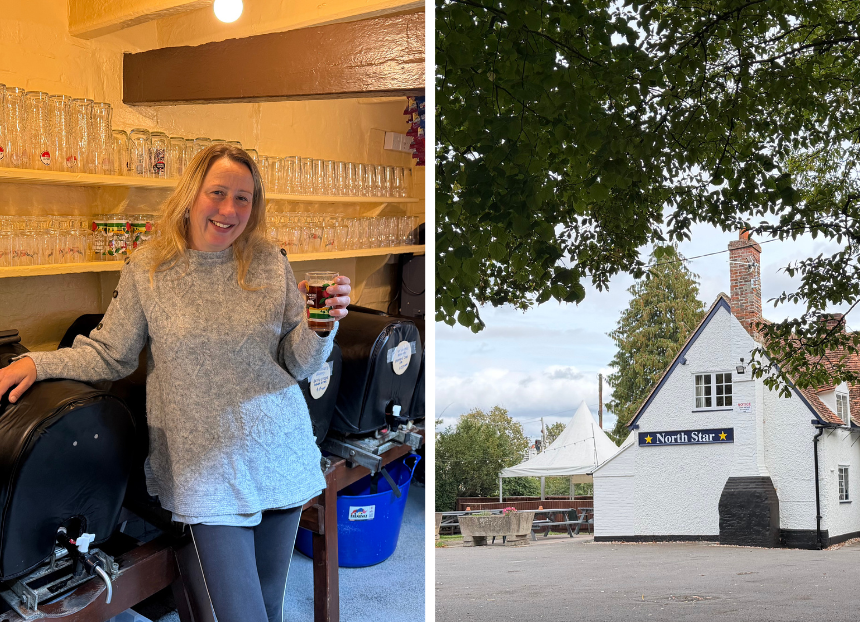
The winner for this year is the North Star in Steventon, near Abingdon in Oxfordshire. Family-owned for generations, this pub had to close for nine months for work to deal with damp and preserve the its Grade II-listed status. It is part of a row of 17th century half-timbered buildings. All of the work was carried out by local craftsmen.
The runner up was the Beacon Hotel in Sedgley in the West Midlands. Famous as the home of Sarah Hughes beers, both the pub and brewery are Grade II listed. The award acknowledges the work done to convert a sitting room and replace an old conservatory to provide much needed additional space and seating.
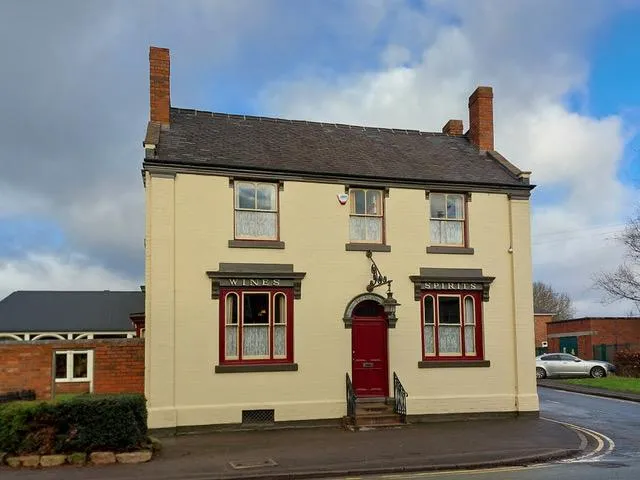
The award is coordinated by Paul Ainswoth, who commented, “Both these pubs have truly precious historic interiors. At the North Star, it’s brilliant that the serious structural issues have been fully addressed but equally great to find it in the hands of management committed to making it a real community hub. The work at the Beacon is a textbook example of how to expand and improve customer facilities without any detriment to the historic core.” Both pubs rate three stars on the National Inventory.