This is a twin-centre pub trail that includes some of the most outstanding pub architecture in London and then moves on to one of the most concentrated clusters of good pubs in the capital. It then finishes at a railway and tube station to take happy drinkers home.
CAMRA’s old Central Southern Region, which included branches from Buckinghamshire, Berkshire and Oxfordshire, traditionally had an annual visit to London. A couple of years ago the region was abolished when CAMRA reorganised its structure but that hasn’t prevented the old region ‘going rogue’ and continuing to maintain the tradition of the London excursion.
This year’s event took place in March, with a pub tour taking in two distinct areas: Kilburn/Maida Vale and Paddington. I was lucky enough to do the trail twice; first researching the route in January. All of us thoroughly enjoyed the event. In fact, we enjoyed it so much that we thought that we would share the route and pub details with London Drinker readers.
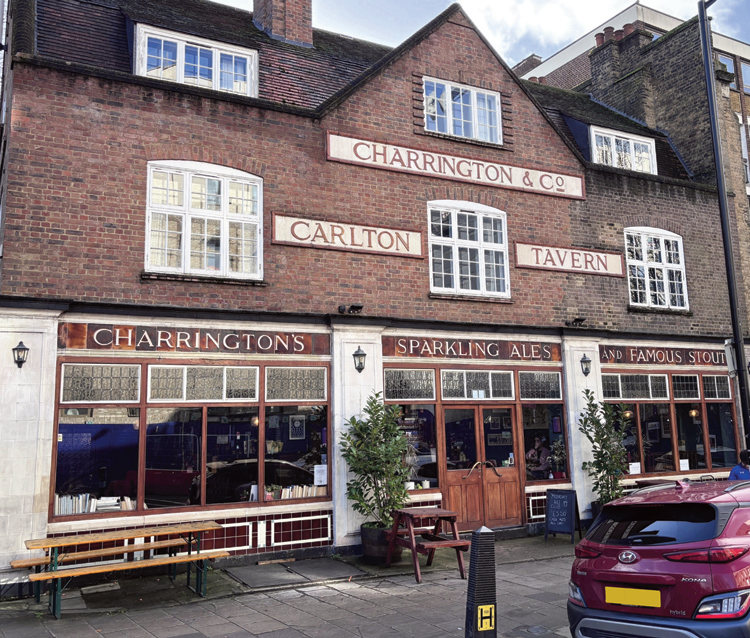
We started between Kilburn Park and Maida Vale tube stations at the Carlton Tavern on Carlton Vale. This is a must-visit pub for all CAMRA members and probably the only building in Britain to achieve listed status after being demolished. I’m sure that London Drinker readers are familiar with the story but for those of you yet to visit, look out for the reconstructed bar counter, etched windows, terrazzo flooring, ceiling mouldings and the original pub sign. See also the non-historical Bayeux tapestry inspired interpretation of modern London life. Three changing ales are available, included house beers from Anspach and Hobday.
A 15-minute walk away south, past Maida Vale tube station, is the Warrington Hotel on Warrington Crescent. This pub is Grade II listed and has one of the most spectacular pub interiors in London, mostly dating from a refit in the 1890s. The grand entrance porch gives an impressive welcome while inside there’s a stunning collection of architectural details: a curved mahogany bar, marble fireplace, gilt-patterned arches and nearly forty mirrors. The main bar is dominated by a huge staircase surrounded by Victorian plasterwork and etched glass. The naked lady paintings on the canopy, though period in feel, actually only date from 1965. On my research visit Draught Bass was one of three ales on offer. However, only one draught ale, Old Speckled Hen, was available when the regional party visited. This led some to sample cans from Belleville Brewery from the pub’s fridge.
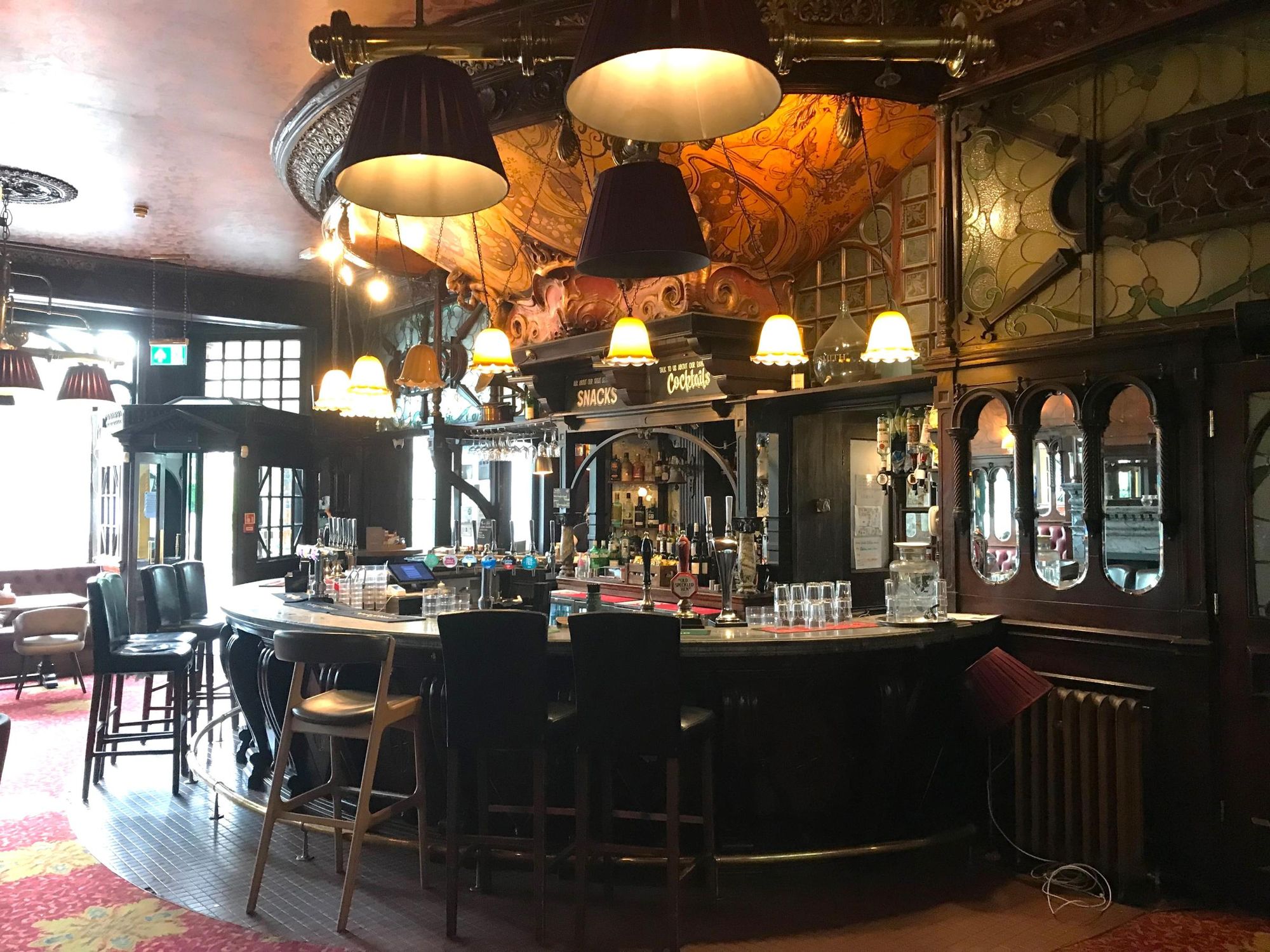
There is a persistent local rumour that the Warrington Hotel’s opulent upper floors operated as a high-class brothel in the late Victorian and Edwardian era, with the lavish ground-floor bar serving as the reception and introduction space. Despite Twickenham brewery’s The Naked Ladies being spotted on draught during the research visit, we can report no nefarious activities continue in the pub in the present day!
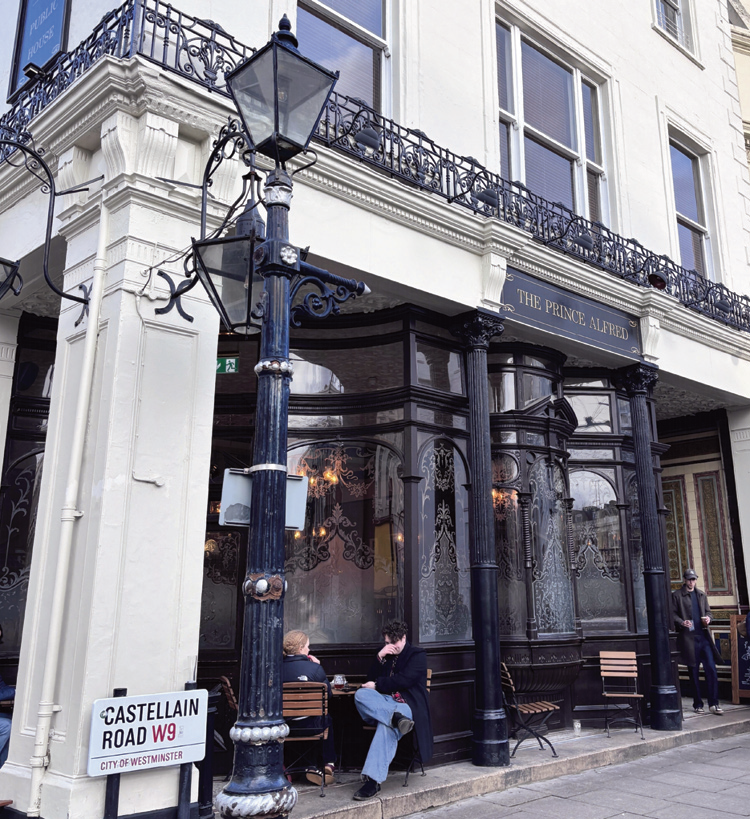
A two-minute walk away, the Prince Alfred on Formosa Street has one of London’s oddest and most prized interiors. Dating from the 1860s and having been remodelled around 1898, the pub represents the ultimate in Victorian pub compartmentalisation. It is the most important example of its kind in London. It is Grade II* listed and is also on CAMRA’s National Inventory of Historic Pub Interiors. It features five distinct bar compartments divided by ornate carved screens around a peninsula servery. The compartmentalised layout includes pot-boy doors, rotating snob screens and a towering island gantry with the original clock as its centrepiece. It also features a plasterwork ceiling, which was restored following a major collapse in 2015, plus engraved glazing, elaborate mosaic and tilework. Operated by Young’s, it features their standard selection of real ales. The pub can get busy and it’s a shame from a drinker’s perspective that the large room at the rear is devoted to diners.
A five-minute walk away, past Warwick Avenue tube station, the Warwick Castle on Warwick Place, is tucked away close to the Grand Union Canal and the Little Venice basin. It was built in the 1840s and the large bar area has a feel of distinct rooms, hinting at a more compartmentalised Victorian past. There’s a completely separate room with a fireplace off to the left. The pub is also recognised on CAMRA’s National Inventory. There’s outdoor seating, which fills rapidly on a sunny day. The pub features two regular and two changing ales. There is a house beer called Made of Ale and Timothy Taylor’s Landlord is a regular.

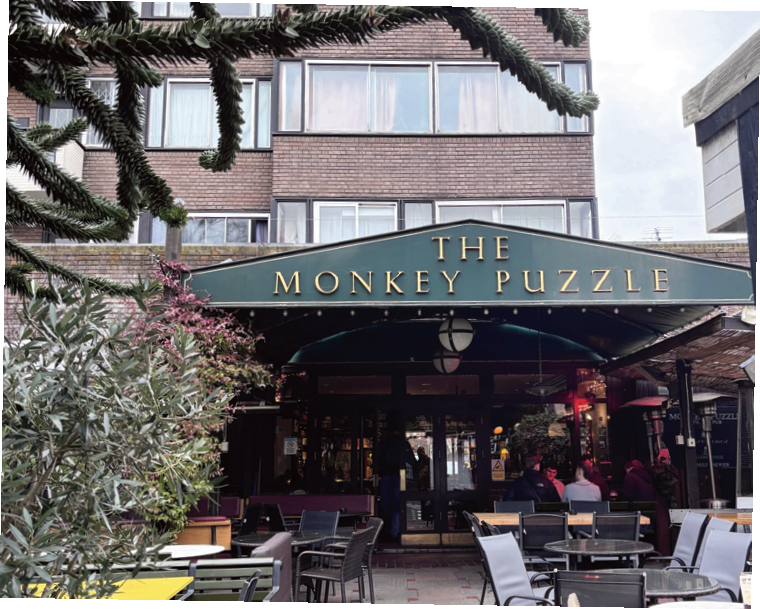
The next pub is a pleasant 20 to 30 minute canal walk along the Paddington Basin. A few members of the party stopped off to redeem some of their vouchers at one of the newest Wetherspoons in London, the Sir Alexander Fleming. A quicker alternative is to go one stop on the Bakerloo Line from Warwick Avenue to Paddington. A few minutes’ walk along Sussex Gardens from Paddington Station is the Monkey Puzzle. Built in 1969 in the ground floor of a residential high-rise development, this pub has a traditional feel inside despite its relative modernity. There is some attractive coloured glasswork separating various seating and dining areas around an L-shaped bar. Look out for the replica map of London created sixteen years after the Great Fire and the eponymous Monkey Puzzle tree in the garden.
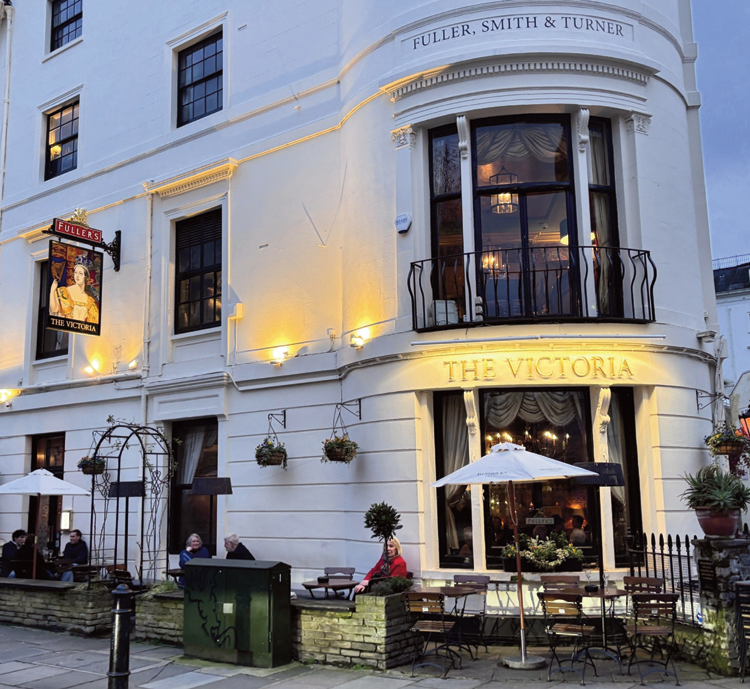
Next, a five-minute walk away, is the Victoria on Strathearn Place. This is a Victorian local of outstanding national importance; it is both Grade II-listed and on CAMRA’s National Inventory. Dating from 1864, it may contain the earliest pub bar-back fittings in the country and, remarkably, little has changed since. The bar-back is the centrepiece with gilded mirrors and a clock still reading 1864. The counter has retained its original panelled bays and has a working brass water-dispenser for diluting spirits. Don’t miss the Regency fireplace tucked into the angle of the building. This is a Fuller’s pub and features the Fuller’s range but also has guest beers. I had an excellent pint of Thornbridge Jaipur.
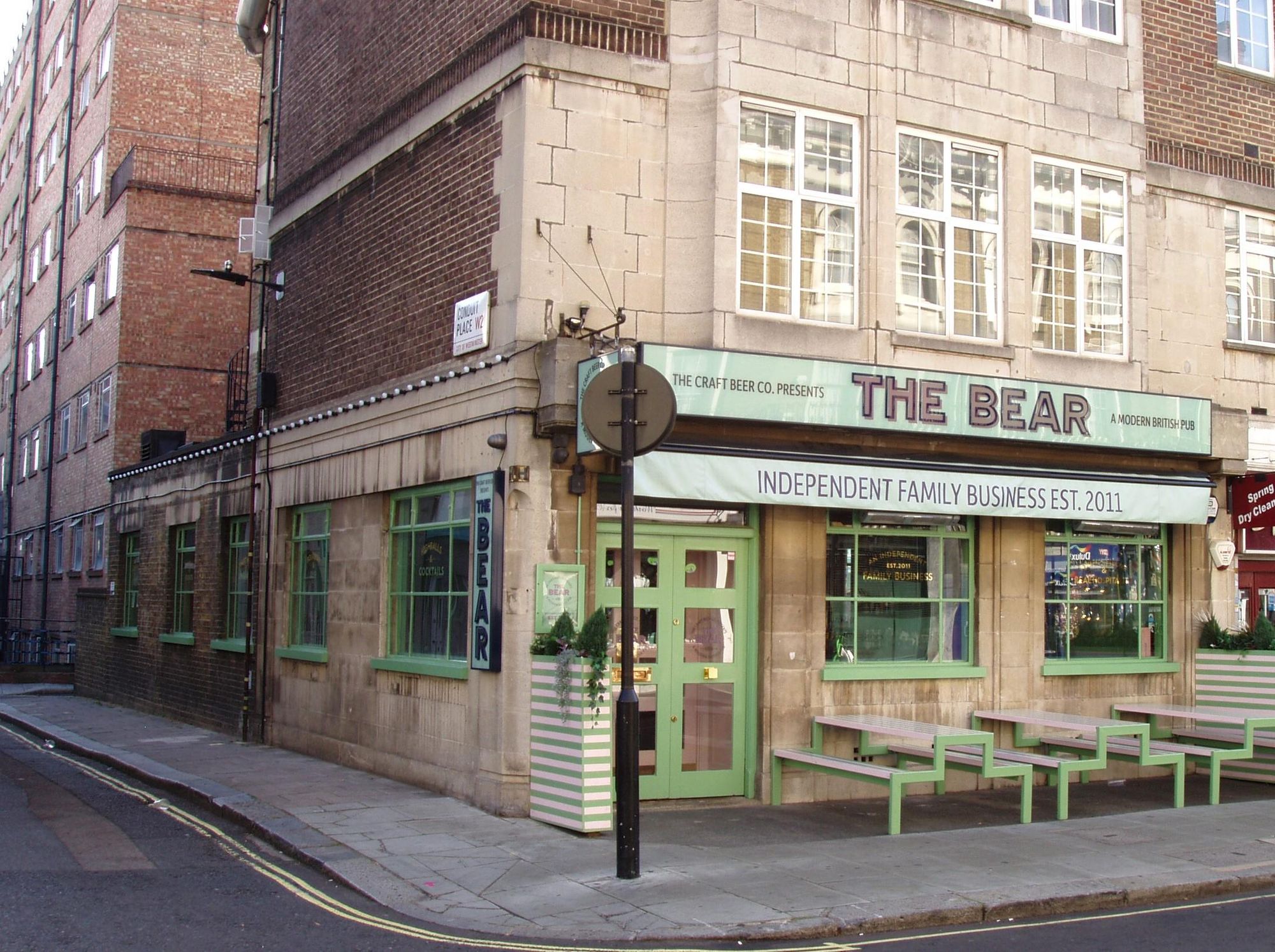
On the way back to Paddington station is a pub that has rapidly established itself as one of west London’s best beer destinations. The Bear on Spring Street is part of the Craft Beer Co estate. It’s a spacious pub with raised seating booths, some additional seating downstairs and a glass door through which the cellar is visible. A good range of cask ale and an even more extensive range of keg beers is available, with one regular house beer and four changing beers, often from Siren, Titanic, Iron Pier and other highly-rated breweries.
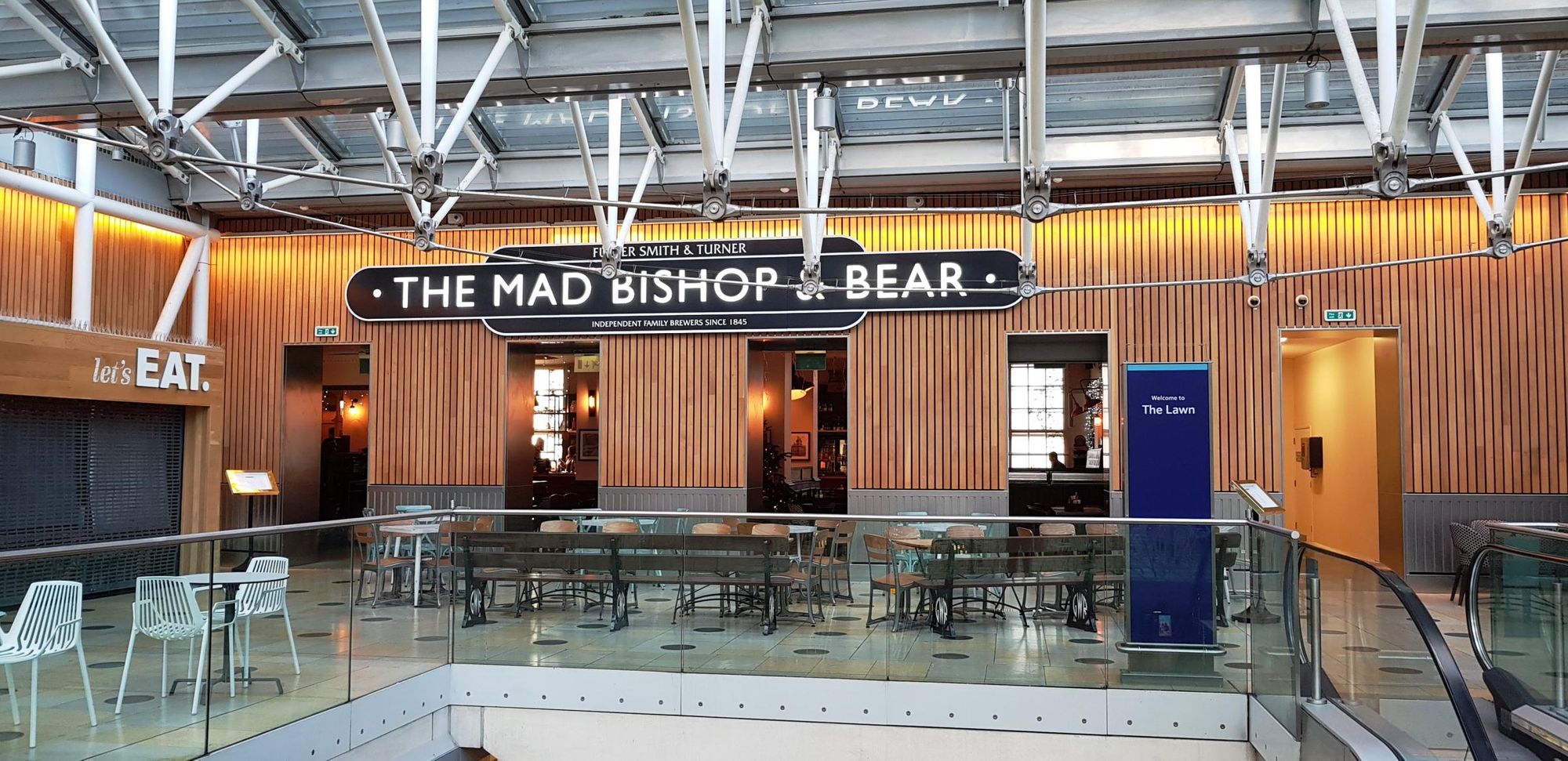
There was a temptation to linger at the Bear, so it was fortunate that the last pub on the trail is inside Paddington Station, raising the chances of drinkers making it home without complications. The Mad Bishop & Bear is somewhat hidden up a couple of escalators in the station shopping centre. The name neatly combines two bear references: Paddington Bear, Michael Bond’s fictional character who arrived at this station from darkest Peru, and the heraldic bear from the Bishop of London’s coat of arms. Once inside, it’s a spacious Fuller’s pub on two levels. Two rows of five handpumps serve Fuller’s cask ales, often including a seasonal, plus one or two guest ales. With station information screens inside, it’s the ideal place to wait for your platform number to appear.
Note: Architectural references summarised in some cases from CAMRA websites.
Mike Clarke