The Crooked House, Himley
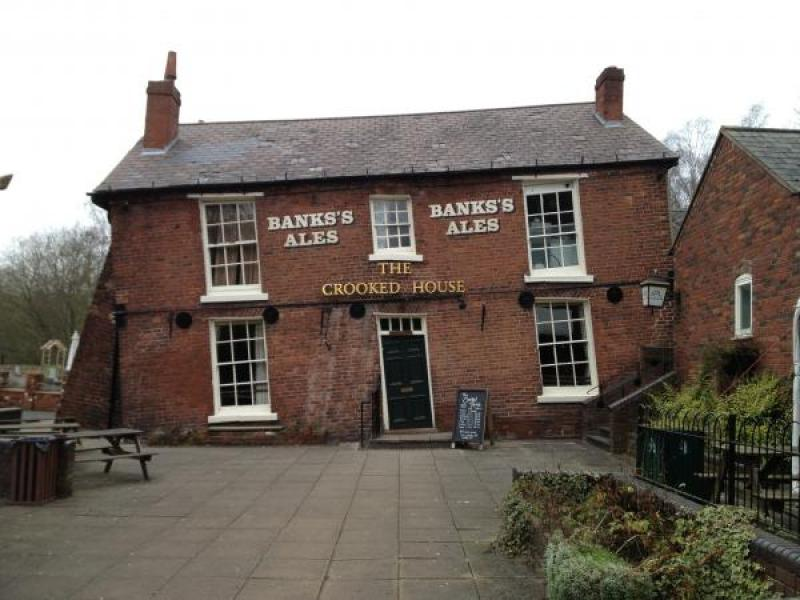
Although not a London pub, the saga surrounding the fate of this Grade II-listed 18th century pub is of national importance in terms of protecting pub heritage. I would however firstly suggest that readers do not draw comparisons to the case of the Carlton Tavern in Kilburn (NW6 5EU) because there are very significant differences. The Crooked House case could set a much more useful precedent.
The Crooked House was disposed of by Marston’s PLC as part of a nationwide review. Shortly after, it caught fire and was subsequently demolished, allegedly for safety reasons but without permission. Six months on from the fire, South Staffordshire Council have served an enforcement notice on the owners, ATE Farms Ltd, requiring them to reinstate the building to what it was before the fire. The notice was served on the company and the current and former directors individually. The council had been in discussions with the owners but, with no progress having been made, the council decided that formal action had become necessary. The owners have a right to appeal to the Planning Inspectorate within 30 days, by which time we would have gone to print. There will be an update in the next edition. If they do not appeal, or lose the appeal, the rebuild must be completed within three years. There are also serious criminal charges involving six people yet to be resolved.
There has been a lot of speculation as to how, if the pub is rebuilt, it will be achieved. The most understandable proposal that I have seen so far is that a concrete platform will be laid at an angle and the pub will be built, more or less normally, on that platform.
CAMRA’s action on planning
Following on from the above, CAMRA’s Pub and Club Campaigns Director, Gary Timmins, commented, “The destruction of the Crooked House was a national tragedy, so it’s fantastic news that the owners have been ordered to rebuild the pub brick-by-brick. This is exactly what we were hoping to hear from South Staffordshire Council and it’s a testament to the hard work of all the dedicated campaigners who stepped up and fought for the Crooked House. It has also been great to see Marco Longhi MP and West Midlands Mayor Andy Street champion this cause. It’s now vital that systematic change happens, to ensure that the Crooked House is the last time we see such a shocking loss. Unfortunately, CAMRA is still investigating eight cases from 2023 where pubs appear to have been demolished or converted without planning permission. We’re calling for Government to bolster planning policy so that unscrupulous developers know they will face action if they breach the law.”
This was no empty rhetoric. At the end of January, Gary, along with Paul Ainsworth (national planning policy adviser) and Ellie Hudspith (senior campaigns and communications manager) met with Lee Rowley MP, the recently appointed housing and planning minister. This was a long-awaited meeting that was rescheduled several times because of the government reshuffle. Discussions focused on two areas: the need for enforcement action to be more effective and the importance of a legal definition of a pub being introduced into planning law. At present, there is no obligation on planning authorities (usually local councils) to investigate possible breaches of planning control. CAMRA believes that this should become a statutory duty.
Likewise, given that the Crooked House is not an isolated case, the demolition of a pub should become a criminal offence, not just a technical breach of planning rules. This would permit stronger penalties to be imposed. Also, the complete restoration of unlawfully demolished pubs, brick by brick, should become standard practice.
There have also been a number of cases where pubs have been converted to restaurants without permission. This problem has been mentioned in these pages previously. Permission is required because they are in different use classes (sui generis and E(b)) but many owners, especially where the pub is food led, try to claim that their pub is, in fact, a restaurant and is in Class E(b). The significance is that Class E carries permitted development rights which could lead to the site being converted to residential use without planning permission. This grey area as to where a pub stops and a restaurant starts needs to be clarified in law. CAMRA, of course, has long had its own definition of a pub.
Discussions with officials are continuing about these and a number of other issues, such as the unauthorised residential occupation of closed pubs. The situation may however become complicated by the current changes being made to the planning rules, not least the definition of ‘brownfield’ sites.
West Midlands pubs proposed for listing
In our December/January edition, I reported on the partnership between CAMRA and the West Midlands Combined Authority and their ‘List Your Local’ campaign. In early February, five pubs were nominated for listing as historic buildings. This is the first tranche, based on 150 submissions received from the general public. There are three in Stourbridge and one each in Walsall and Wednesbury. The proposals will be reviewed by Historic England and then, if accepted, passed to the secretary of state for culture, media, and sport, currently Lucy Frazer, for approval. That should, however, not be taken for granted. A list of the pubs involved will be put on our website. Andy Street, the mayor of the West Midlands and chair of the WMCA, commented, “Six months on from the Crooked House tragedy, it’s a reminder to appreciate our precious cultural heritage, not least our local pubs. They are vital community assets deserving of protection and we’re working with CAMRA to do just that.”
Meanwhile, nearby in Birmingham, the Grade II-listed Bartons Arms, has closed because its operators found it ‘commercially unviable’. It is hoped that new operators can be found for this wonderful pub. Building Preservation Notices Readers will be aware that there is a problem with the procedure for granting listed building status in that Historic England are obliged to give due notice to the owner of the property in question that listing is under consideration and the owners may be tempted to pre-empt the listing by demolishing the property, legally or otherwise. A recent case has however suggested that if local authorities, who should be working with Historic England, were to use a Building Preservation Notice (BPN), this could be avoided. BPNs are provided for in Section 3 of the Planning (Listed Building & Conservation Areas) Act 1990 and are a temporary measure providing statutory protection for six months pending a listing decision. Contravening a BPN by organising or carrying out work without consent can be a criminal offence and the penalties are similar to those for contravening listed building status (fines, imprisonment and/or a requirement to reverse any work that has been carried out). Owners and occupiers cannot object or appeal against a BPN. They can however appeal against any consequent statutory listing decision.
The case in question is the Grade II-listed Bolton in Earl’s Court in the Royal Borough of Kensington & Chelsea. The pub dates from 1892 and closed in 2022. It was operated by Mitchells & Butlers but their lease expired and the freeholders declined to renew it. This is the first time that RBKC have used a BPN. It followed a visit by planning and heritage officers who found the pub to be of significant heritage interest. They also discovered that it had significant links to the LGBTQ+ community during the 1950s. If BPNs have been on the statute book for 34 years, it seems odd that RBKC have only used one for the first time now and I haven’t heard of any other councils using one. A possible explanation could be this note, which comes for the GOV.UK website on the subject: ‘If the local authority serves a BPN incorrectly or the building is subsequently not granted listed building status the owner may be able to seek compensation for any loss from the local authority’.
Individual pubs
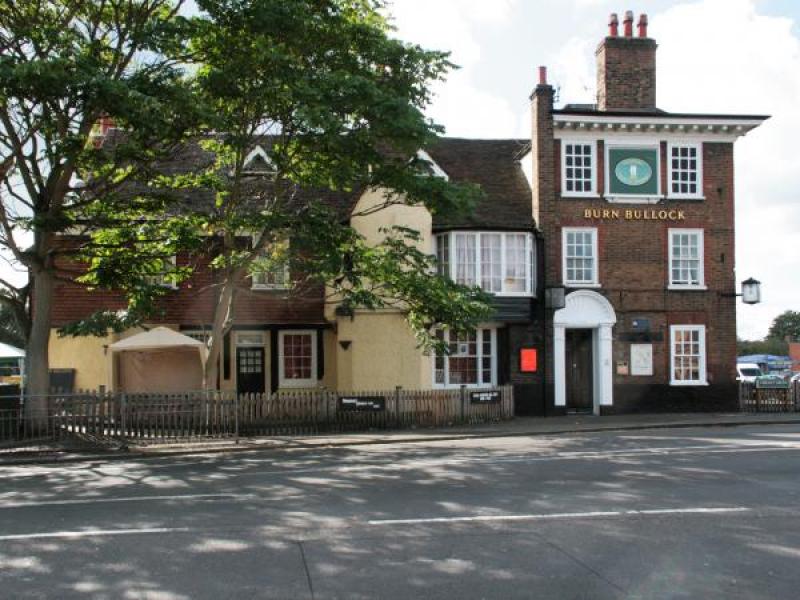
The Grade II-listed Burn Bullock, on the Cricket Green in Mitcham, is on Historic England’s Heritage in Danger list, as published in November 2023. It closed in 2013 and its condition is described as ‘very bad’. There has been some enforcement action carried out but nothing sufficient to secure the future of this historic pub. Worryingly, the tenant of the nearby Windmill (CR4 4HA), very much a community pub, retires in October and the freehold is owned by the same company that owns the Burn Bullock. Various attempts have been made to have both pubs listed as Assets of Community Value but Merton Council have refused them all.
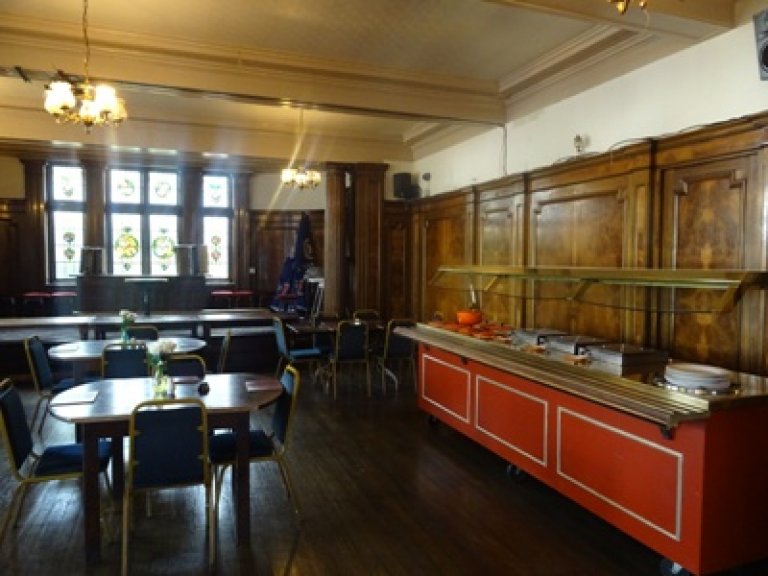
The Grade II-listed Eastbrook in Dagenham is probably one of the finest 1930s pubs in London. It features two extremely fine panelled rooms, the Walnut Room and the Oak Room. A planning application has been submitted to extend the existing hotel accommodation and while this, in itself, is not a problem, the plan is to convert the Oak Room into the hotel’s reception. CAMRA’s Pub Heritage Group are concerned at this room no longer being available to the public and have submitted an objection accordingly.
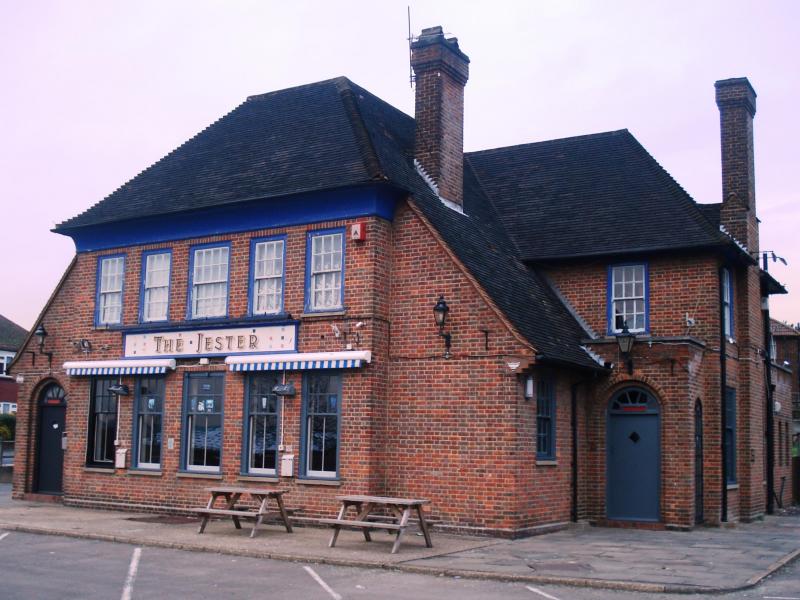
The Jester in Cockfosters, an estate pub built in 1958, suffered a serious fire in 2018. The owners started demolition work but this was stopped by Barnet Council. Local campaigners had hoped to have the pub rebuilt and had their hopes raised when a planning application for demolition and replacement with houses was refused. The Council ordered the owners to rebuild the pub or an ‘equivalent community floorspace’. After losing an appeal, the owners then just sold up and the site was left derelict. In 2022 another planning application was submitted, for demolition and replacement with houses and a nursery. Nothing happened for a while but it appears that revised plans have recently been submitted and the local consultation exercise started again. A further report will follow.
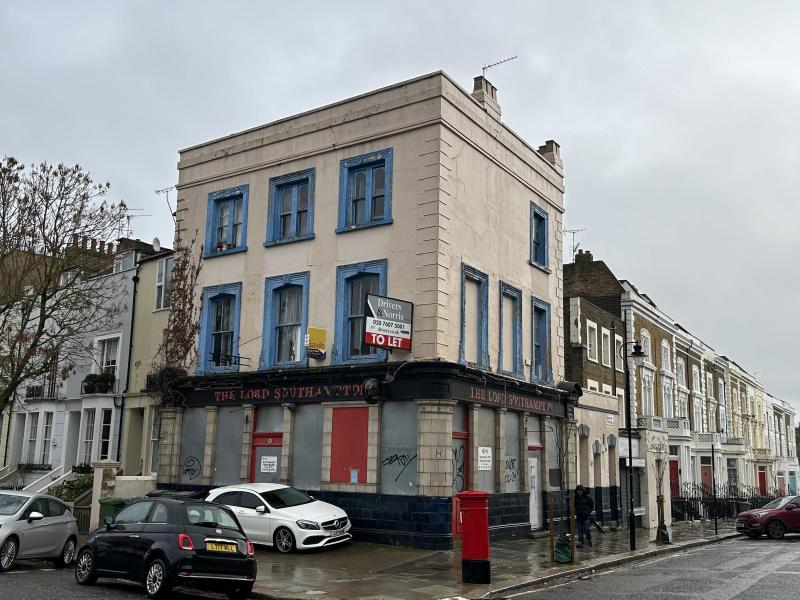
The Lord Southampton in Kentish Town, which rates one star on CAMRA’s register of historic pub interiors, closed in January 2022 and was put up for auction last year. The new owners have now obtained a new premises licence, despite some curious local objections, although it is not known when the pub will reopen.