Pubs wanted
In the introduction to the last edition, I said that I foresaw that there would still be people who want to join or return to the trade as well as small pub chains and breweries who wish to expand and that there needed to be pubs available for them to do so. It appears that I was correct although I didn’t see it happening this way and I’m not sure how welcome it is. As detailed in the Trade News section, various private equity investment companies are taking an interest (in both senses) in our pubs. In most circumstances, investment is welcome but I’m not sure here. Private equity operations normally expect a quick return on their investments and so, given that it may well be several years before what is left of the UK pub trade is fully back in business, the suspicion must be that they see their opportunity in property development. The changes to the planning system which are due to be made later this year could become very significant.

Business Rates Review
Clues had been given as regards the partial continuation of the business rates holiday. Property advisors, the Altus Group, as reported in the Morning Advertiser (19 February), said that the Financial Secretary to the Treasury, Jesse Norman, had asked local authorities, to ‘consider issuing business rates bills after the Chancellor has set out his plan at the Budget’ because ‘it is in the public interest to avoid any potential confusion for businesses and to avoid the cost of having to re-bill businesses in light of any measures that may be included in the Budget’. The latest estimate from the Ministry of Housing, Communities and Local Government is that the business rates holiday for 2020/2021 (in England only) cost £11.06 billion.
Irrespective of what the Chancellor did in this budget, it has long been generally agreed that the system for charging for non-residential property needs a full review. The Government announced in the last budget that a report was to be commissioned and evidence was invited last July, with the report due about now. According to the Morning Advertiser (as above) however, this has been postponed until the autumn. An interim report is due on 21 March but that may come too late to be included in this edition.
Pubs Code News
The Pubs Code Adjudicator, Fiona Dickie, has issued some timely clarification in the Morning Advertiser as to how the code applies when pubs change hands. If a tied pub is acquired by one of the pub owning businesses (POB) already regulated by the PCA, the tenant is covered by the code from the date of sale. If however a pub is purchased by an unregulated company from a regulated one, the tenant immediately loses the right to a Market Rent Option (MRO) but other code protection continues until the next rent review or the end of the tenancy, whichever comes first.
If an unregulated POB acquires enough pubs to take it over the 500 pub threshold, so long as it continues to own more than 500 pubs for at least six months, its tenants become protected by the code from the start of the next financial year. If the pubs involved were purchased from a regulated POB, the tenants would temporarily lose their rights under the code, including the MRO, from the date of sale to the start of the next financial year.
The PCA has had a further disagreement with Heineken owned Star Pubs & Bars (see page 31). Star, incidentally, who have reportedly allowed tenants around £62 million in rent reductions during the COVID crisis, has extended its 90% rent concession arrangement, originally due to end on 1 March, to 16 May. From 17 May the reduction will be reduced to 10% and, from 21 June, full rent becomes payable again. This is in line with the projected reopening dates for pubs and applies to England only.
Shortage of Cans
Happily this problem does not appear to have ‘crossed the pond’. Apparently, beer consumption in the USA increased last year to such an extent that, by the end of 2020, there was a national shortage of cans. 60% of beer sold in the USA is in cans. As reported in Beer Business Daily, the Ball Corporation, the biggest producer of cans in the world, said that they were short by ten billion cans. The shortage was largely caused by a lack of manufacturing capacity rather than any shortage of aluminium. The popularity of the new ‘hard seltzer’ drinks and a move away from single use plastics also contributed to the shortage. The biggest impact, predictably, was felt by craft brewers because the large users such as Pepsi, Coke, AnheuserBusch and Molson Coors have preferential contracts with the producers.
No New Stars
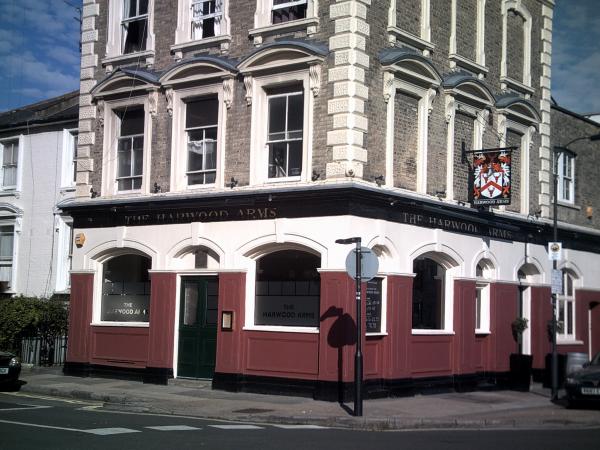
Understandably, given that they have barely been open, no new pubs were awarded Michelin stars this year. There are currently sixteen of them in the UK and Ireland, with the Harwood Arms in Fulham (SW6 1QP) being the only one in Greater London. Not too far away however is the Hand & Flowers in Marlow, Buckinghamshire (SL7 2BP), operated by Tom Kerridge, which is the only pub in the country with two stars.
Disappearing Beer
A pair of strange stories. The news website, India.com, has reported that a total of around 29,000 litres of confiscated alcohol has disappeared from 25 out of the 30 police stations in Faridabad, the capital of Haryana state in India. The courts had ordered that it be destroyed but it disappeared before that could happen. Most of the alcohol was in plastic bottles and the website claims that the police are putting the blame on rats.
In an even more bizarre case, three breweries in Mar del Plata in Argentina, Heller, La Paloma and Baum, joined together to carry out an experiment into aging beer underwater. Last November, barrels containing 600 litres of beer were placed in a steel cage aboard a shipwreck 20 metres down on the seabed. Sadly, when they went to retrieve it in early March, it had gone. The owner of Baum brewery, Juan Pablo Vincent, told the local paper, La Capital, “It was a very educational project: we knew it was being done in other parts of the world but never before had it been done here and so deep. We lost money but more than anything, what bothers us is that this project had sentimental value and they took away the possibility for us to learn from it.” Vandalism is suspected, which is sad because the proceeds were promised to the local natural sciences museum. They are going to try again.
My thanks to John Cryne for alerting me to these items.